
Plumbing Installation in Silver Spring, PA
Plumbing installation in Silver Spring, PA is planned work: setting new fixtures, running supply and drain lines, roughing in a remodel and hooking up appliances. Call to talk through the project and schedule licensed plumbers on a day that fits your build.
What counts as a plumbing installation job
Installation covers anything you are adding or relocating on purpose, as opposed to fixing something that broke. A bathroom remodel, a basement bath, a utility sink in the garage and a kitchen island with a prep sink all qualify. So do swapping a toilet you chose yourself and connecting a dishwasher.
Water heaters and whole-house pipe replacement have their own pages, since they follow different steps. See water heater installation for tanks and tankless units and repiping for replacing the supply system in an older house. This page is for everything between those two.
Common projects and what each one involves
| Project | What the plumber does | What you settle first |
|---|---|---|
| New bathroom or half bath | Runs hot, cold and drain lines, sets a toilet, sink and tub or shower | Fixture list, layout, and where the drain can tie in |
| Kitchen remodel or island sink | Moves supply and drain, adds a vent, connects faucet, disposal and dishwasher | Cabinet plan, sink model, appliance specs |
| Laundry hookup | Installs a valve box, a standpipe and a drain, and checks the vent | Washer location, drain size, floor drain or not |
| Basement bath | Adds a drain line or an ejector pit when the fixtures sit below the sewer | Whether the sewer is public or private, and the floor plan |
| Outdoor spigot or yard line | Adds a hose bibb or runs a buried line to a new point | Location, 811 locate, winter shutoff plan |
| Water softener or filter | Cuts into the supply, adds a bypass and a drain connection | Equipment model, drain access, power outlet |
The right column matters more than people expect. Decisions made after walls are closed cost far more than ones made on paper.
Choosing fixtures and sinks before the visit
Buy the fixtures first, or at least pick the exact models. Rough-in dimensions, mounting height and hole spacing change from one model to the next, and the plumber builds the lines around what you chose. Keep the spec sheets and installation guides that come in the box.
Faucets and sinks must match each other, so confirm the number of faucet holes, the sink bowl depth and the cabinet width. A toilet's rough-in distance sets how far it sits from the wall, and toilet replacement works the same way when you simply upgrade the fixture. Bring any question about water pressure or shutoff placement into the planning conversation.
Supply lines, drain lines and venting
Supply lines carry pressurized water to each fixture, and common materials include copper, PEX and CPVC. The plumber picks the material based on what already runs in the house, since mixing metals and plastics needs the right transition fittings. Every fixture also gets its own shutoff so one repair does not close the whole bathroom.
Drains work differently. They rely on gravity and slope, and every fixture needs a vent so the water leaves quietly without siphoning a trap dry. A drain that must cross a joist, run uphill or reach a distant stack is the first thing to settle when you move a fixture. Moving a toilet is harder than moving a sink for that reason.
How a remodel rough-in is sequenced
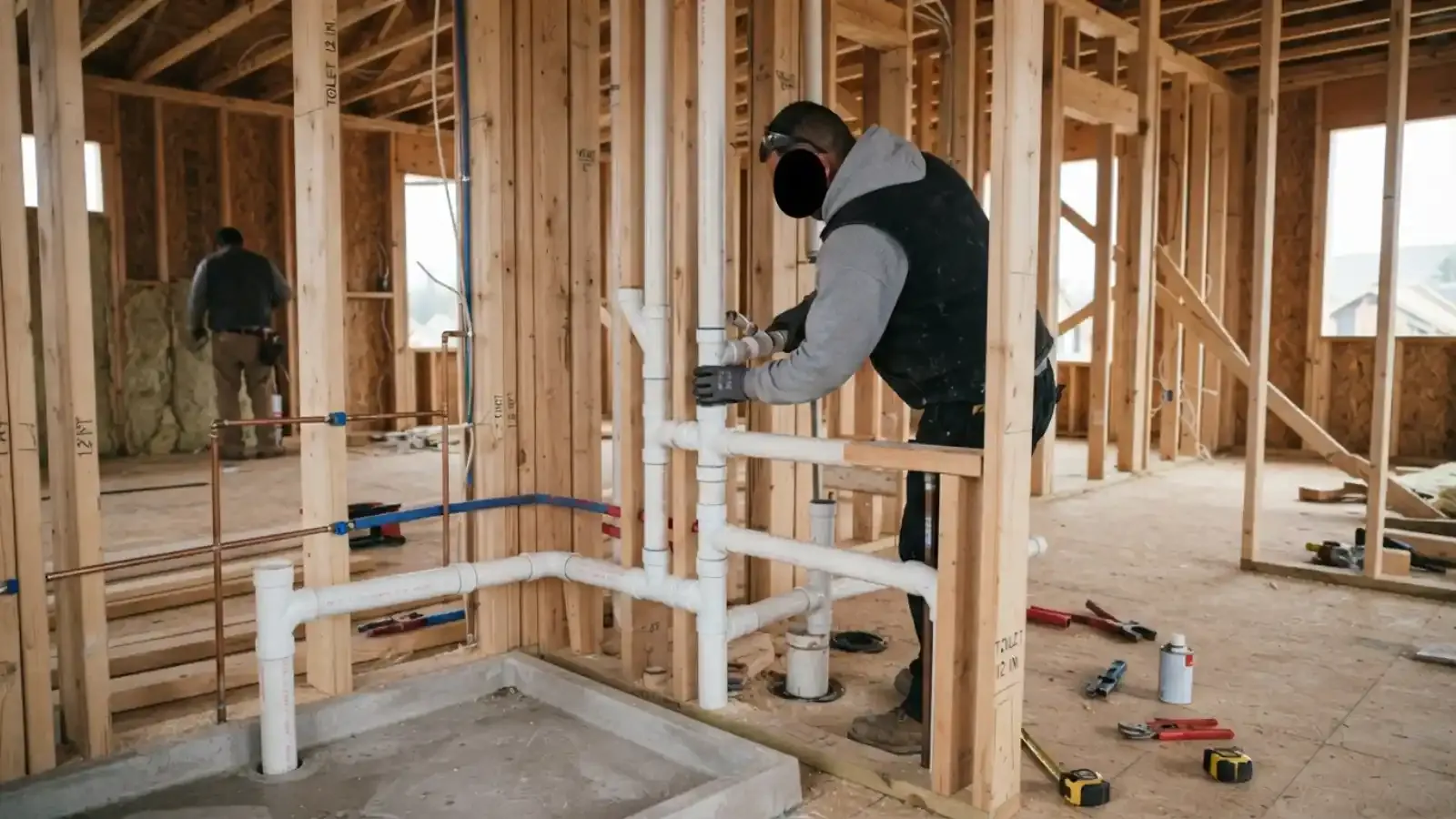
Rough-in happens before drywall, tile or cabinets. A typical order looks like this.
- Walk the plan
The plumber compares drawings to the actual framing and flags joists, studs or ducts that block a run.
- Open and mark
Walls and floors are opened where needed, and fixture locations and drain centerlines are marked.
- Run the pipe
Supply, drain and vent lines go in, with shutoffs at each fixture and hangers to hold the pipe.
- Test before closing
Supply lines are pressure tested and drains are checked for leaks while everything is still visible.
- Inspect if required
Ask the township or borough office whether an inspection applies before the walls close.
- Set the fixtures
After finishes are done, the plumber returns to set the toilet, sink, tub or shower trim and connect appliances.
New construction plumbing
New homes and additions use the same stages at a larger scale: underground or under-slab drains first, then rough-in after framing, then fixtures at the end. Coordination with the builder matters because other trades share the same cavities.
One early question affects everything else: public sewer or septic, and public water or a private well. West Hempfield Township's building permit form asks the applicant to mark water and sewer as public or private, so settle it before the drawings go in. Landisville sits in East Hempfield Township, so a project near Landisville means asking that township about permits instead.
Appliance, softener and utility hookups
Smaller hookups are the most common installation calls. Confirm these details before the plumber arrives.
- Dishwashers need a supply stop, a drain connection with a high loop or air gap, and an outlet.
- Washing machines need two valves, a standpipe or utility sink drain, and a pan if upstairs.
- Ice makers and refrigerator lines need a quarter-inch tube with a shutoff, ideally in an accessible spot.
- Water softeners need a bypass, a drain connection and sometimes a pressure check.
- Gas ranges and dryers use gas lines, and gas work needs a qualified tradesperson. Confirm who will handle it before the visit.
- Sump or utility sinks need a drain that sits low enough, so measure early.
Permits, 811 and checking any contractor
Permit rules vary, so ask the township zoning and permits office or its building code inspector before you start. Do not assume a fixture swap needs none or that a rough-in does. For digging, Pennsylvania law requires a call to PA One Call (811) at least three business days before excavation, and the locate costs the homeowner nothing.
Under the Pennsylvania Home Improvement Consumer Protection Act, a written contract is required when work costs more than $500 and contractors doing $5,000 or more in a year must register with the Attorney General and show the number on contracts. You can rescind a home improvement contract within three business days of signing, except as the law provides for emergencies. Verify any plumber, ours included, at attorneygeneral.gov.
What drives the cost of plumbing installation
Installation prices swing with the size of the project and how hard it is to reach the pipes. A sink swap over an existing shutoff is far simpler than a new bathroom on the second floor. Clear price before work starts, and a project this size should come with a written scope.
Each fixture adds supply, drain, vent and trim work, and long runs add more material and time.
Open framing is quick. Finished walls, slab floors and tight crawlspaces slow the work.
Old galvanized or brittle pipe may not tie in cleanly, so part of the old system can end up replaced.
Premium faucets, large tubs and unusual rough-ins need more labor and parts.
Paperwork, scheduling and any required inspection add to the timeline.
If a hidden leak or old pipe shows up when the wall is open, coverage varies by policy, so ask your insurer, and photograph anything unexpected first.
Want a real number for your home? Then call (717) 349-9373 and describe the project.
Plumbing Installation questions answered
It helps a great deal. The plumber builds the supply and drain lines around the exact model, so rough-in dimensions and spec sheets should be in hand before pipes are cut or walls are closed.
Often, yes, but it depends on the drain. A toilet needs a larger drain, a vent and the right slope, and a joist can block the run. The plumber checks framing first to see what the floor allows.
Both. New construction follows rough-in, then fixtures after finishes, and works best when the plumber is part of the schedule early. Bring drawings and ask about the builder's sequence.
Ask your township or borough office, since permit rules vary by municipality. West Hempfield Township names a third-party building code inspector on its permit application, and that office can tell you whether your scope needs review.
Yes. Have the appliance on site, along with its installation sheet, so the plumber can check the supply, drain connection and shutoffs before they connect it.
The plumber stops and explains what is there, including galvanized steel or cast iron. Repair, partial replacement or a larger repipe are all options, and you decide before more work happens.
Where the rules in this plumbing installation guide come from
- According to the Pennsylvania Office of Attorney General's Home Improvement Consumer Protection Act brochure, contractors doing $5,000 or more of home improvement work in a year must register, and a written contract is required when work costs more than $500. Check any contractor at attorneygeneral.gov.
- According to the Pennsylvania Public Utility Commission, state law requires contacting PA One Call (dial 811) at least three business days before excavation, and homeowners pay nothing for the locate.
Book plumbing installation with one call
Tell the dispatcher about your home and ask for a same-day appointment when available.