
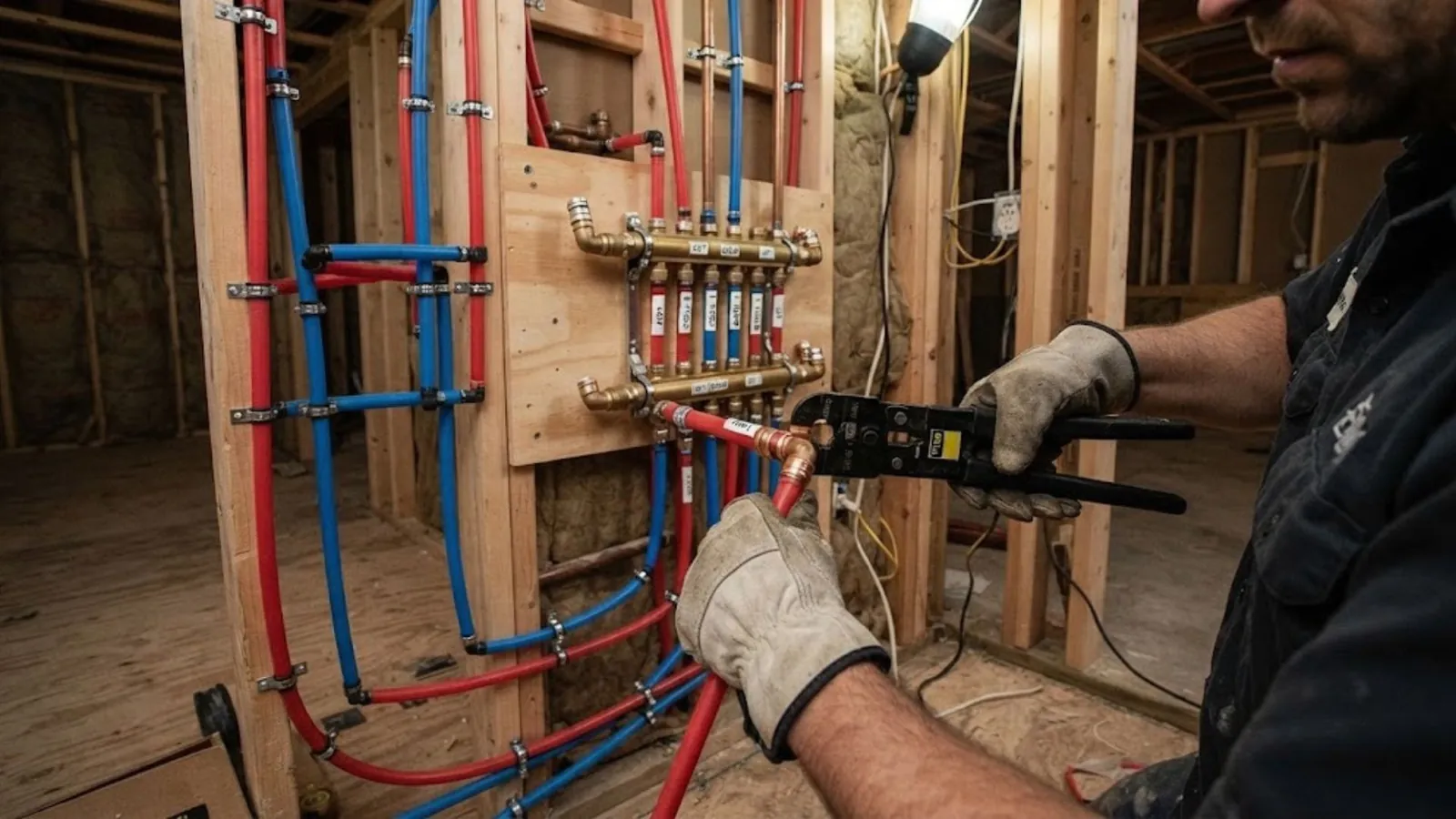
Repiping in Silver Spring, PA
Repiping is the planned replacement of the water supply pipes inside a house, either the whole system or one section of it. We send licensed plumbers to Silver Spring, PA and nearby towns, and this page covers pipe behind your walls, not the buried line from the meter.
Signs your supply piping is wearing out
One symptom rarely settles the question. A pattern of them does.
- Brown or orange water at the tap after the house has sat idle.
- Pressure that has slipped year after year, even though the street supply is fine.
- A second or third pinhole leak, or green crust on copper joints.
- Plastic fittings that crack or snap when touched during other repairs.
- Rust-stained threaded joints on steel pipe in the basement.
- Old gray plastic piping, which many plumbers advise replacing.
- A metallic taste that returns after the tap runs for a minute.
Inside the house or outside it: what repiping covers
Repiping replaces supply lines downstream of the main shutoff valve inside the house: the branches to sinks, showers, toilets, the water heater and appliances. The buried run from the meter, curb stop or private well to the house is a separate job, handled under water service line repair. A weak street connection and weak house piping can look alike at the tap, so sort out which is failing first.
Cities and boroughs founded in the 1700s, such as Lancaster, hold a mix of old and renovated houses. A home built decades ago can still have galvanized steel supply lines. That is general trade knowledge, and the only way to know what your house has is to look at the pipe.
Pipe materials compared
Plumbers argue about materials, so ask for the reasoning behind the one proposed for your house.
| Material | What it offers | What to ask about |
|---|---|---|
| Copper | A long track record, rigid runs, tolerates heat | Cost, soldering in tight spaces, and whether your water has been linked to pinholes. Ask your water utility for its annual quality report. |
| PEX | Flexible tubing with fewer joints, quicker to route through finished walls | Fitting style, sunlight exposure near the water heater, and how connections are supported |
| CPVC | Rigid plastic, familiar to many installers, usually lower in material cost | Brittleness with age and cracking at fittings, which is why it appears on repair calls |
| Galvanized steel | What many older houses already have | Not a choice for new work. It corrodes inside and narrows over time. |
Whole house or partial: how to decide
Use the count and the pattern. A single failed joint in an otherwise sound run is a repair. Several failures in the same material, or failures that keep moving from one spot to the next, point toward replacing that whole run or the whole system. When a pipe has already split, see burst pipe repair for the immediate fix.
A partial repipe makes sense when the trouble sits in one area, such as the kitchen and bath on one side, and the rest is in good shape. Ask the plumber to mark on a sketch what will and will not be replaced, since mixed materials meet at transition fittings. If you suspect hidden damage first, a leak detection visit can show whether the problem is spread out or concentrated.
How a repipe is planned and carried out
- Walk-through and fixture count
The plumber looks at pipe material, access, the water heater and every fixture before writing anything down.
- Written scope and material choice
You get a document stating which lines are replaced, with which material, and what is left alone.
- Permit check
Permit rules vary, so ask the township zoning and permits office or its building code inspector, and ask the plumber who files.
- Water shutoff plan
Agree in advance when the water will be off and which fixtures will work between stages.
- New lines, connections and pressure test
Fresh runs go in, fixtures reconnect, and the system is pressure tested before any wall is closed.
- Patching and final check
Access openings are closed, and the plumber confirms flow and pressure at each fixture.
Living in the house during the work
Water is shut off for stretches while old lines come out and new ones connect. Ask for the schedule in writing, because a plan that moves room by room is easier to live with than a single long outage. Keep a few gallons for drinking, and plan showers and laundry around the shutoff windows.
Expect openings in drywall, ceilings or floors along the route. Whether patching and painting are in the quote varies between companies. Decide that before the contract is signed, not after the walls are open.
Galvanized, CPVC and copper: three common starting points
Galvanized replacement is the most common reason for a full repipe. The pipe rusts from inside, so flow shrinks even when it looks sound outside, and replacing it restores both pressure and water color.
CPVC that cracks tends to do so at fittings, sometimes years after installation. A single crack calls for a repair, but several suggest the system is aging together.
Copper pipe repair is practical for isolated damage. If a house shows pinholes in multiple spots, ask what is causing them before choosing the same material again.
Checking a contractor before you sign a repipe contract
Pennsylvania requires contractors doing $5,000 or more of home improvement in a year to register with the Attorney General, and the registration number must appear on contracts and estimates. A written contract is required once the work costs more than $500. A contractor may not demand payment before the contract is signed.
You can generally rescind a home improvement contract within three business days of signing. Verify any plumber, us included, at attorneygeneral.gov or by calling 1-888-520-6680.
What drives a repipe estimate
A repipe estimate rises with the number of fixtures, the number of floors and how hard the walls are to open. A small house with open basement access is a different job from a large one with plaster and finished ceilings. A clear price before work starts should list material, patching and permits separately.
Every fixture needs its own branch, and each floor adds vertical runs.
Copper, PEX and CPVC differ in material cost and in how long each takes to install.
Unfinished basements and open ceilings go faster than plaster, tile or tight attic spaces.
Drywall repair and paint may be included or handled by another trade.
Permit rules vary, so ask the township or borough office what applies to your house.
Planned replacement is a different matter from water damage after a leak, and coverage varies by policy, so ask your insurer, and photograph any damage you want considered.
Ask for a whole-house number and a partial number side by side when you call (717) 349-9373.
Repiping questions answered
Count the failures and look at the material. One leak in a sound pipe is a repair. Repeated leaks, rust-colored water or collapsing pressure in old steel pipe usually point to replacement.
No. A repipe covers supply lines inside the house after the main shutoff. The line from the meter, curb stop or well to the house is a service line.
Usually some, along the new routes. Flexible tubing needs fewer and smaller openings than rigid pipe. Ask where the openings will be and who patches them.
Most people do, with planned shutoff windows. Agree on the schedule in writing and keep drinking water on hand.
They can, if old steel or clogged lines were the restriction. They will not fix a weak supply from the street or a failing pressure reducing valve.
Permit rules vary, so ask the township zoning and permits office or its building code inspector. A plumber who handles the paperwork should say who files it.
Where the rules in this repiping guide come from
- According to the Pennsylvania Office of Attorney General's Home Improvement Consumer Protection Act brochure, contractors doing $5,000 or more of home improvement work in a year must register, and a written contract is required when work costs more than $500. Check any contractor at attorneygeneral.gov.
Book repiping with one call
Tell the dispatcher about your home and ask for a same-day appointment when available.