Emergency Burst Pipe Repair in Silver Spring, PA
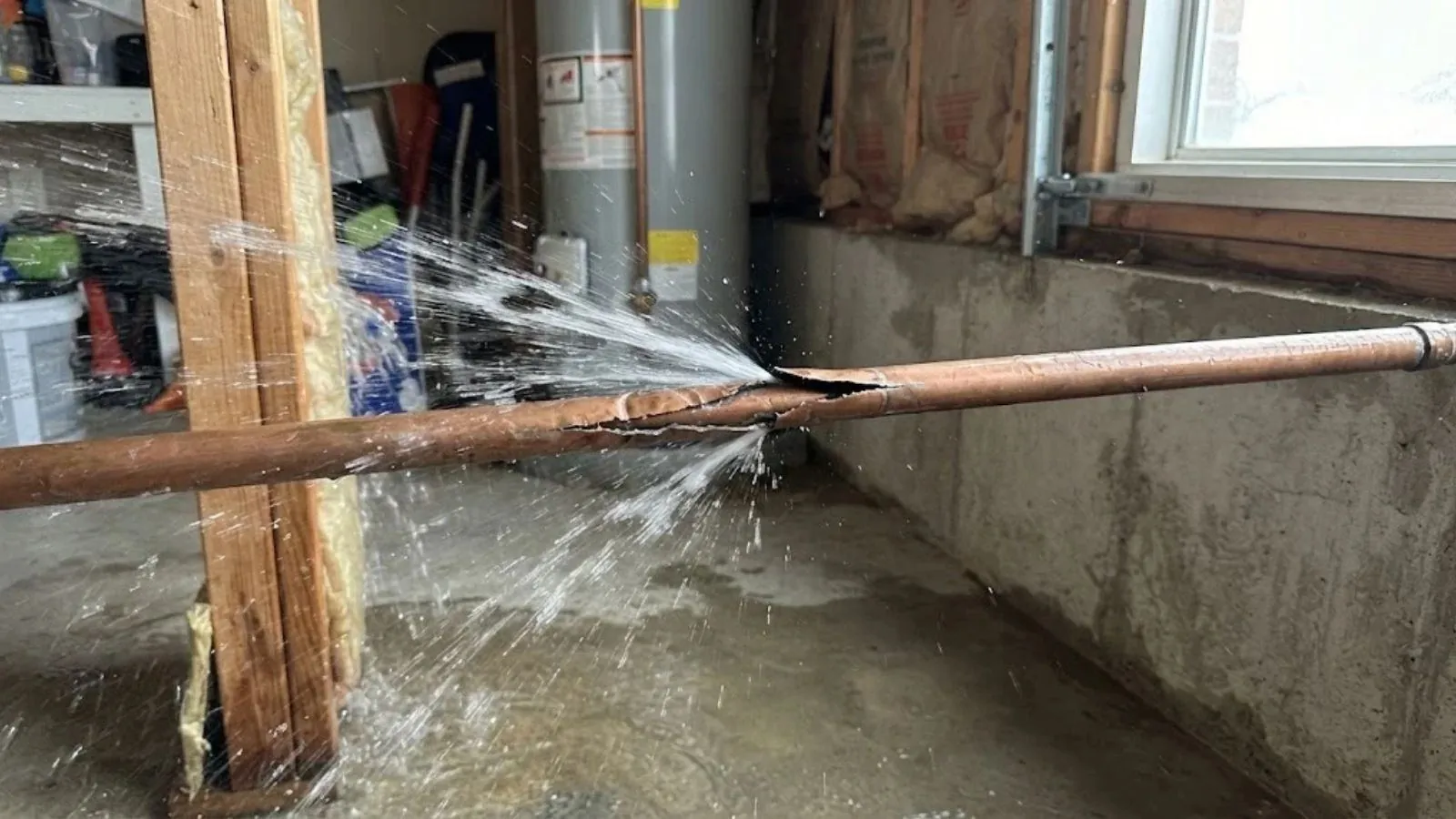
Burst pipe repair means stopping the flow from a supply or drain pipe that has split, cracked or pulled apart, then replacing the failed section. We send licensed plumbers across Silver Spring, PA and nearby towns 24/7, including freezing nights and holidays.
Water pouring from a pipe: first steps
Call the 24/7 line as you head for the valve or right after the water stops. A same-day appointment is offered when one is open, and a split pipe at 3 a.m. is dispatched like any after-hours call. The first minutes matter more than the repair, because every minute of flow soaks insulation, drywall and flooring.
- Close the main water valve. If you cannot find it, close the valve at the meter.
- Open the lowest tap in the house, then flush the highest toilet, to drain pressure from the lines.
- Switch off power to wet rooms at the breaker. Stay out of standing water near outlets or the panel.
- Turn off an electric water heater at its breaker so the elements do not run dry.
- Lift rugs, move belongings and photograph the damage before drying begins.
- If you smell gas at any point, leave the building and call your gas utility or 911 from outside.
Why pipes split, crack or pull apart
Freezing is the classic cause. Water expands as it turns to ice, pressure builds between the ice plug and a closed tap, and the pipe splits where it is weakest, often away from the ice itself. Nearby Landisville averages about 23 inches of snow a year, so exposed runs in crawlspaces, garages, exterior walls and outdoor spigot lines need attention every winter. Open cabinet doors on exterior walls and let a tap drip in hard cold.
Corrosion, pressure spikes, loose joints and a nail or screw from remodel work cause the rest. Older homes, including many in river boroughs such as Columbia, mix original and renovated piping, so one break can expose a second weak spot nearby.
Pipe material, how it fails and the usual repair
| Pipe type | How it tends to fail | Usual repair |
|---|---|---|
| Copper | Splits along its length after a freeze, pinholes from corrosion, joints letting go | Cut out the damaged length and join new copper with fittings |
| PEX | Often stretches through a freeze, but fittings and clamps can fail | Replace the fitting or a short section, then check the whole run |
| CPVC | Turns brittle with age and cracks at fittings or under stress | Replace the cracked section and inspect nearby fittings |
| Galvanized steel | Rusts from inside and fails at threaded joints, sometimes in several places | Short repairs hold briefly, so ask about replacing the run |
| Cast iron or PVC drain | Cracks from settling, roots or impact | Cut out the section and fit new pipe with couplings |
What a burst pipe repair visit involves
If the break is outdoors between the meter and the house, the work follows the process on water service line repair. Inside the house, a typical visit runs like this.
- Confirm the water is off
The plumber checks the main valve actually holds and drains the affected run.
- Trace the full damage
A frozen pipe often splits in more than one place, so the plumber follows the run well past the visible break.
- Cut out and replace
The failed length comes out and new pipe goes in with fittings suited to the material.
- Restore pressure slowly
Water returns gradually while the plumber watches every joint and purges air at the taps.
- Advise on drying and weak spots
You get a plain account of what else looks vulnerable and what to dry first.
Cracked or broken pipe repair
A crack differs from a burst in speed, not in principle. A hairline crack may weep for days before anyone notices, while a burst sprays at once. Either way the pipe wall has failed, and a wrap or clamp only buys time.
Short-term fixes include a repair clamp or a push-fit coupling to stop the flow until proper work can happen. A lasting repair removes the damaged length and joins new pipe with soldered, crimped or compression fittings, depending on the material. Ask which one you are getting.
Use a simple decision rule. One failure in an otherwise sound pipe calls for a section repair. Two or three failures in a short span, or pipe that looks pitted or flaking, suggest the run is wearing out. Ask for a price on repiping next to the repair, and consider leak detection if a stain suggests water escaping elsewhere.
Frozen pipe section: how to thaw one safely
A pipe that is frozen but not yet split gives you a chance to stop the damage. Work in this order.
- Open the nearest tap so melting water and steam have a way out.
- If any water is leaking, close the main valve first.
- Warm the pipe with a hair dryer on low, warm towels or a heating pad, starting near the tap and working back toward the frozen part.
- Never use a torch, propane heater or any open flame. It can ignite framing and open soldered joints.
- Keep electric heat away from standing water.
- Raise the room temperature and open cabinet doors under sinks on exterior walls.
- If the frozen part is inside a wall or under a floor and does not thaw, or you see a bulge or split, call the 24/7 line.
- When flow returns, check every joint on that run for drips as pressure rebuilds.
Pinholes, copper repairs and drain pipe breaks
A pinhole leak shows as a fine spray or a green crust on copper. A clamp can slow it, but a pinhole usually means the pipe wall is thin around it, so the plumber checks the surrounding length.
Copper repair needs a dry pipe, because solder will not flow into a wet joint. The plumber drains the run first, which is why a stubborn drip can slow the work.
Drain pipes are not pressurized, so their breaks show up slowly: a damp ceiling below, a sewage smell, or fixtures that drain poorly. Repair means cutting out the cracked length and fitting new pipe, and the leak often turns out to be wider than the first stain suggested.
Drying starts the moment the water stops
Wet insulation, drywall and carpet padding that stay damp for a day or two invite mold. Pull up soaked rugs, run fans and a dehumidifier if you own them, and leave cabinet doors open so wall cavities can dry.
Do not run the central air handler over wet areas if the water was sewage. Photograph everything first, because coverage varies by policy and your insurer will want the record.
What shapes the price of a burst pipe repair
Price follows where the break sits and how much of the pipe has to be replaced. A split in an exposed basement run is a different job from one in a wall over a finished ceiling. A clear price before work starts should include the opening and the pipe, and say what is left for other trades.
Exposed pipe is quick to reach. A split behind tile or a finished ceiling adds opening and patching.
Copper, PEX and CPVC use different fittings and tools, and larger lines take longer to drain and refill.
Freeze splits often run for several inches, and a second break may sit farther along the run.
Cutting drywall, moving a vanity or clearing a crawlspace is part of the job and part of the estimate.
A night, weekend or holiday visit can be priced differently from a scheduled one. Ask before you agree.
Burst pipe coverage varies by policy, so ask your insurer before cleanup, and photograph the damage, the broken pipe and the steps you took to shut off the water.
Tell us where the water is and what is wet when you call (717) 349-9373.
Burst Pipe Repair questions answered
Yes. The line runs 24/7, and a burst pipe at midnight is dispatched the same way as one at noon. Same-day help is arranged when a crew is open. Close the main valve while you wait so the flow stops before the plumber arrives.
If you can reach the valve in seconds, yes. If the room is flooded or an outlet is wet, call first and let the dispatcher walk you through a safe approach.
If it has not split, a slow thaw often leaves it intact. If it has split, only the damaged length needs replacing, though a pipe that froze once may be due to freeze again.
A tap that gives only a trickle or nothing in cold weather, frost on the outside of an exposed pipe, or a bulge in the line are common signs. Thaw it carefully and watch for leaks.
A slow drip on a tap served by an exposed pipe keeps water moving and relieves pressure. Open cabinet doors on exterior walls too, and keep the heat on if you leave town.
Where the rules in this burst pipe repair guide come from
- According to the Pennsylvania Office of Attorney General's Home Improvement Consumer Protection Act brochure, contractors doing $5,000 or more of home improvement work in a year must register, and a written contract is required when work costs more than $500. Check any contractor at attorneygeneral.gov.
Call the 24/7 line about burst pipe repair
Describe the problem to the dispatcher and a licensed plumber is sent when the work is urgent.