
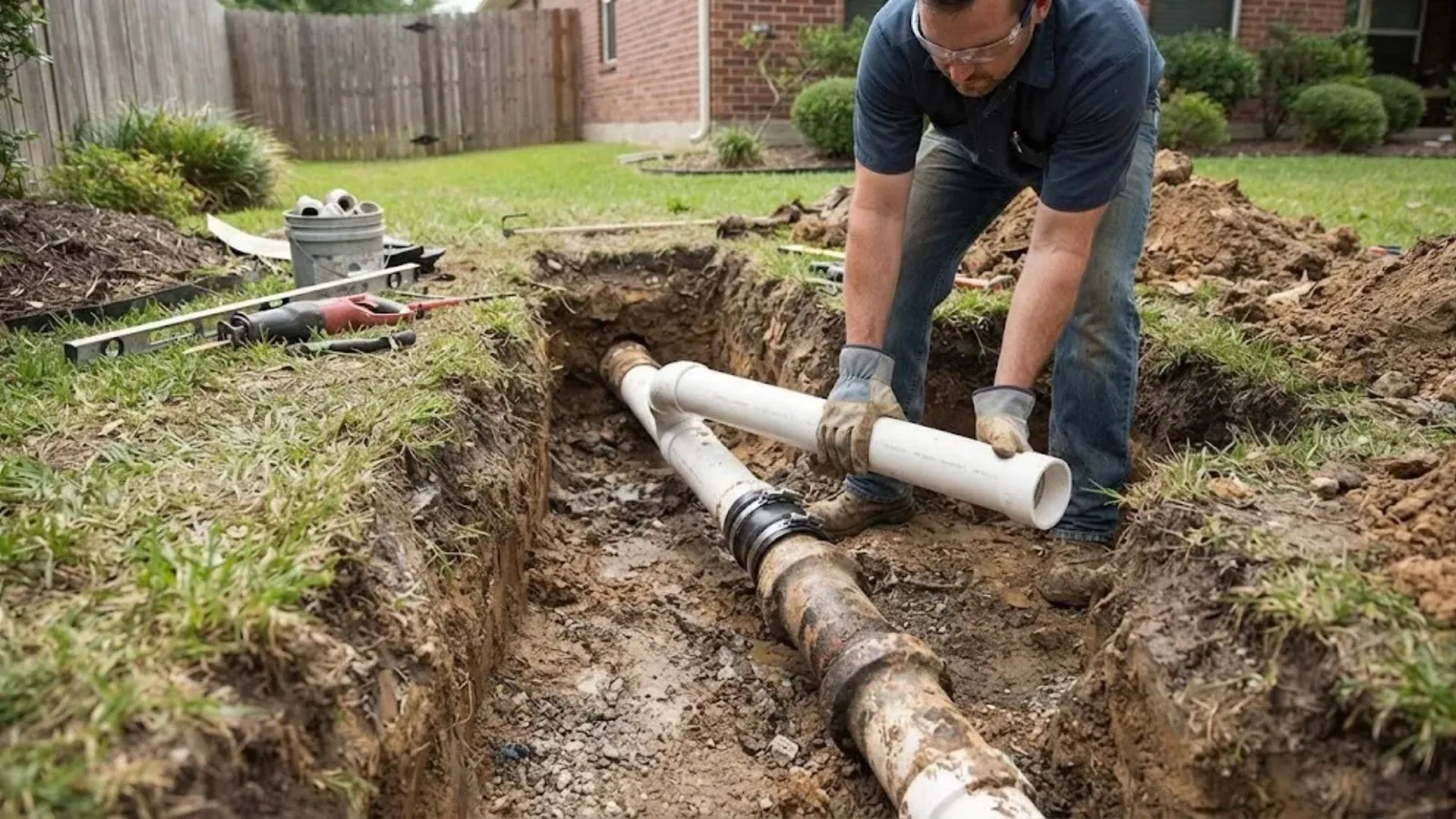
Emergency Sewer Line Repair in Silver Spring, PA
Sewer line repair is the fixing or replacing of damaged pipe between your house and the public sewer or septic tank. In Silver Spring, PA, our 24/7 line sends a licensed plumber when a cracked, rooted or collapsed line cannot wait.
Urgent signs of a broken sewer line
Our line answers 24/7, and same-day appointments are offered when available. Some sewer damage can wait for a daytime visit, but other signs mean wastewater is leaving the pipe or the ground above it is failing. Call right away for sewage in the yard, a sunken patch over the line, or backups that return within days of a cleaning.
A strong sewer smell outdoors, wet soil along the pipe route when it has not rained, or several drains failing at once also point to a break.
- Use as little water as you can until the plumber has looked at the line.
- Keep children and pets off soft or sunken ground over the pipe route.
- Do not dig to find the pipe. Pennsylvania requires a call to 811 at least three business days before excavation, and the locate costs homeowners nothing.
- Mark the wet or sunken spot with a stake and take a photo beside a fixed object for scale.
- Tell the dispatcher if the house uses septic. A failing tank or drain field can look like a broken line.
What damage to a sewer pipe looks like inside
Sewer pipes fail in a few recognizable ways. A crack may run along or around the pipe, an offset joint leaves a step that snags paper, and a bellied section sags so solids settle in a pool. Roots push in at joints and, in worse cases, a section collapses and closes the line.
You cannot tell which one you have from the surface. A camera run, covered on our sewer camera inspection page, shows the type of damage, its distance from the cleanout and how much of the line is affected before any digging is planned.
Repair options and their trade-offs
Four methods cover most sewer repairs. The camera findings decide which one is possible, and your yard and driveway decide which one is practical.
| Method | What happens | Works best when | Main trade-off |
|---|---|---|---|
| Spot repair | Dig to the damage and replace a short section | One cracked or offset joint, pipe otherwise sound | Leaves the rest of an aging line as it was |
| Open-trench replacement | Dig the full run and lay new pipe at the right slope | Pipe is collapsed, bellied or badly rooted along its length | Most disruption to lawn, paving and landscaping |
| Cured-in-place lining | A resin liner is cured inside the old pipe | Pipe is continuous and mostly intact, with cracks or root entry points | Cannot fix a collapse or a belly, and trims the pipe's inner diameter |
| Pipe bursting | A new pipe is pulled through as the old one is split | Line has a clear path and needs full replacement with little digging | Needs entry and exit pits and a clear route, and can affect nearby utilities |
Trenchless or trench: how the choice gets made
Trenchless work appeals because it spares the lawn, the porch and the driveway. It only works if the pipe offers a continuous path, and lining needs walls that can still carry a liner. A collapse, a heavy belly or a broken fitting forces a dig at that spot, whatever method comes after.
Open trench has its own honest advantages. The plumber sees the pipe, corrects the slope and reconnects every branch in the open. Ask for both options in writing when both are possible, with the disturbed area and the restoration spelled out.
Cast iron sewer pipe: the usual failures and the repair paths
Many homes built decades ago still have cast iron drains, and the pipe tends to fail from the inside. Wastewater runs along the bottom, so that part rusts and flakes first, narrowing the opening and eventually leaving a hole. The joints use couplings that can loosen with age.
Repairs range from swapping a failed section for plastic with transition couplings to replacing the run. Lining is sometimes possible. If the pipe sits under a slab, the plumber should explain how the concrete will be opened and restored before work begins.
Root intrusion: when cutting stops being enough
Cutting roots keeps a line running, and main line cleaning or hydro jetting are the normal tools. But roots return through the same opening, so repeated cleanings in a single year suggest the joint should be sealed. Lining or a spot repair at the entry point usually ends the cycle.
From first call to finished repair
- Stabilize the line
The plumber clears the blockage if one exists, so the house is usable and the camera can travel.
- Find and record the damage
A camera and locator mark where the break is, how deep, and which fixtures it affects.
- Agree on the scope in writing
A clear price and method are set before work starts, and the contract is signed before any payment is requested.
- Locate utilities and sort out permits
Digging waits on the 811 locate, and permit rules vary, so ask the township or borough office.
- Repair, test and restore
The new pipe or liner is tested with water and the camera, then the trench or pits are backfilled.
Septic tank or public sewer: who is responsible for which pipe
West Hempfield Township's permit application asks owners to mark sewer as public or private and to attach a septic permit if one applies. That question matters for a repair. On septic, the pipe from the house to the tank is the owner's, and the tank and drain field are separate systems with their own problems.
On a public sewer, the pipe from the house to the main is often the owner's responsibility, but where it ends varies. Ask the township office or your sewer authority where your side stops. Repairs inside the city of Lancaster fall under city rules rather than the township's, so give the dispatcher your full address. Our Lancaster plumbing coverage page lists the ZIPs we serve there.
Checking any contractor before a sewer repair
Pennsylvania's Home Improvement Consumer Protection Act requires contractors doing $5,000 or more of home improvement in a year to register with the Attorney General, and the number must appear on contracts and estimates. Work costing more than $500 needs a written contract, and a contractor may not demand payment before you sign it.
You can generally cancel within three business days of signing, except as provided by law for emergencies. Verify any contractor at attorneygeneral.gov or by calling 1-888-520-6680.
What drives the cost of sewer line repair
Sewer repair varies more than almost any plumbing job because the pipe is buried and the conditions differ. A short spot repair near the house and a full run under a driveway are very different scopes.
A deeper pipe needs more digging and shoring, and a longer run takes more material and time.
Spot repair, lining, bursting and full replacement carry different labor, equipment and restoration needs.
Lawn is simple to restore. Concrete, pavers, trees and slab floors add steps.
Cast iron, clay and plastic are repaired differently, and a rotten old pipe may need more replaced than first planned.
Inspection, utility locates and any required permits add steps before the first shovel goes in.
Coverage for sewer damage varies by policy, so ask your insurer, and photograph the damage first. Keep the camera footage and the written scope as well, since both help the conversation.
Want a clear price for your pipe, not a guess? Then call (717) 349-9373 and say whether the line runs under a lawn, a patio or a slab.
Sewer Line Repair questions answered
Yes. The line is staffed 24/7. If the line is leaking or collapsing, the plumber first stabilizes the situation so you are not living with a backup. The permanent repair is then planned from the camera findings.
A clog clears and stays clear. A broken line backs up again after cleaning, often in the same pattern. Sunken ground, wet soil and sewage smells outdoors also point to a break. Only a camera confirms it.
Usually not at the collapse. A liner needs a continuous path and a pipe that still holds its shape. The failed section is typically dug out and replaced, and lining may be used on the rest of the run.
Yes, for any excavation. Pennsylvania law requires a call to 811 at least three business days ahead, and the utility locate is free to homeowners. The contractor normally makes the call, but you can confirm that it was done.
It depends on the pipe. On a mostly intact line, a well-installed liner seals cracks and joints without a trench. On a bellied or collapsed line it solves nothing, and replacement is the honest answer.
The township or borough where you live. Permit rules vary, so ask the zoning and permits office or its building code inspector, and ask your contractor who handles the paperwork.
Where the rules in this sewer line repair guide come from
- According to the Pennsylvania Office of Attorney General's Home Improvement Consumer Protection Act brochure, contractors doing $5,000 or more of home improvement work in a year must register, and a written contract is required when work costs more than $500. Check any contractor at attorneygeneral.gov.
- According to the Pennsylvania Public Utility Commission, state law requires contacting PA One Call (dial 811) at least three business days before excavation, and homeowners pay nothing for the locate.
Call the 24/7 line about sewer line repair
Describe the problem to the dispatcher and a licensed plumber is sent when the work is urgent.