
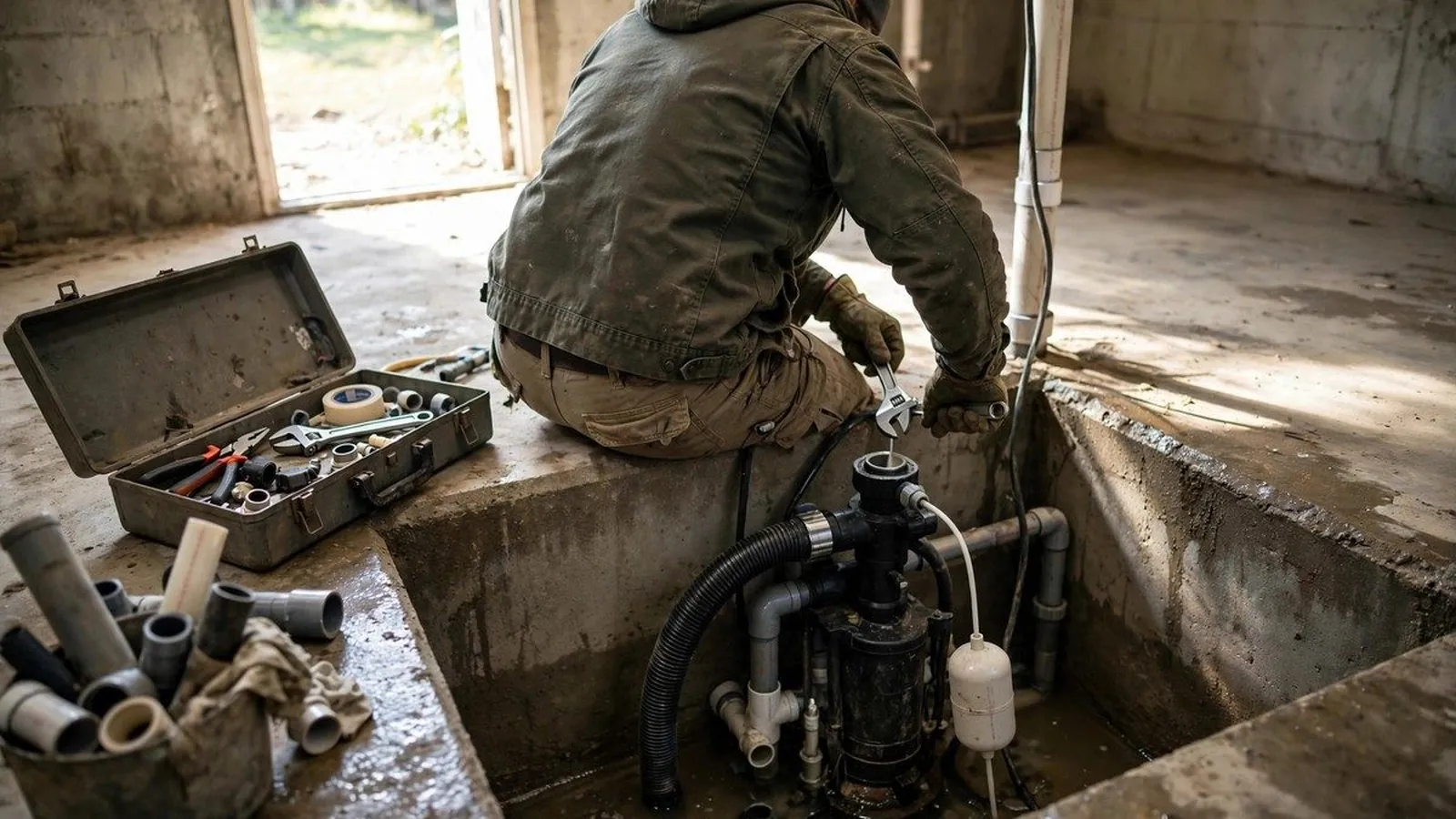
Emergency Sump Pump Repair in Silver Spring, PA
Sump pump repair fixes or replaces the pump that clears groundwater from a basement pit, along with the sewage ejector pump that lifts wastewater up to the sewer. We dispatch licensed plumbers across Silver Spring, PA and nearby towns 24/7, because pumps tend to fail during storms.
Basement taking on water: first steps
Call the 24/7 line, then put safety ahead of the water. Same-day visits are offered when a slot is open, and a storm-night call is taken like any after-hours call, so tell the dispatcher how deep the water is and whether anything electrical is wet.
- Stay out of the water if it covers outlets, the panel or plugged-in appliances. If the panel is flooded, call your electric utility or 911 from upstairs.
- Check that the pump is plugged in and that its GFCI outlet has not tripped, then press reset.
- With the pump unplugged, lift the lid and free the float if it is jammed against the pit wall.
- Bail or wet-vac the pit only when the pump is unplugged and you are not standing in water.
- Lift stored items off the floor and photograph the waterline.
- If the water smells like sewage, treat it as contaminated. Wear gloves and boots and keep children and pets out.
How a sump pump works, in plain terms
A sump pump sits in a basin, or pit, at the lowest part of the basement or crawlspace. Groundwater and seepage drain into the pit, a float rises with the water, and the float switch starts the pump. The pump pushes the water up a discharge pipe and out of the house.
A check valve on that pipe keeps the water from dropping back into the pit. Each part can fail on its own, which is why the repair usually starts with finding out which one did.
Pump symptom, likely cause and fix
| Symptom | Likely cause | Usual fix |
|---|---|---|
| Pump does not start | Tripped GFCI, power outage, dead float switch or seized motor | Reset and test power, replace the switch or the pump |
| Runs constantly | Stuck float, failed check valve, heavy inflow or an undersized pump | Free or replace the float, replace the valve, review pump size |
| Runs but moves little water | Clogged intake or impeller, air lock or frozen discharge | Clear the intake, vent the air, thaw or reroute the discharge |
| Turns on and off in short bursts | Check valve letting water fall back, or a small basin | Replace the valve or adjust the float height |
| Loud grinding or rattling | Worn bearings or debris in the impeller | Clean it out, or replace the pump if the motor is worn |
Rain, the river and what a pump can and cannot do
A sump pump removes groundwater and rain seepage that collects in the pit. It does not stop a river from flooding. The Susquehanna at Marietta has a flood stage of 49 feet, and its records include a 64.54 foot crest in June 1972 from the remnants of Hurricane Agnes and 58.16 feet in September 2011 from the remnants of Tropical Storm Lee.
The practical lesson is to test your pump before wet seasons. Nearby Landisville averages about 45 inches of precipitation a year, so a pump gets plenty of work even in ordinary years. Homes near the river in Marietta should also watch the gauge forecast and ask their insurer how flood damage is handled, since policies differ.
Battery backup, check valve and discharge line
Storms cut power at the moment a pump is needed most. A battery backup pump sits beside the main one with its own float and battery, and an alarm tells you when it takes over. Water-powered backups rely on public water pressure, so they are not an option on a private well.
The discharge should end outside, several feet from the foundation, on ground that slopes away. Rules on where it may run vary, so ask the township or borough office, and do not tie it into a sanitary sewer without checking. With about 23 inches of snow a year, a buried or iced-over outlet can block the line, so keep it clear in winter.
Sewage ejector pumps are a different job
A sewage ejector pump lifts wastewater from a below-grade bathroom or laundry up to the main drain. Its basin is sealed and vented, and it handles waste, not clean groundwater. Never open the lid to look around while it is running, and do not add a sump pump's discharge to it.
Signs of trouble include gurgling at fixtures, a sewage smell, an alarm and slow draining in the lower bathroom. A drain backing up in the basement can come from the pump or from the main line, so rule out the line through sewer line cleaning before replacing equipment.
Replacing a sump pump: what the visit covers
- Power down and clear the pit
The pump is unplugged, the water bailed and the basin cleared of silt and debris.
- Check the basin and discharge
The plumber measures the pit and looks at the pipe route and the outlet.
- Remove the old pump and valve
The check valve and fittings come off so the new pump starts clean.
- Set the new pump level
The float is positioned so it rises freely and does not touch the wall.
- Run a water test
Water goes into the pit to confirm the pump starts, empties and shuts off without chatter.
A ten-minute pump check before the wet season
- Pour a bucket of water slowly into the pit and watch the float rise and the pump start.
- Check outside that water leaves the discharge pipe and flows away from the house.
- Listen for grinding, rattling or a motor that hums without pumping.
- Clear silt and debris from the pit and the pump intake.
- Test the battery backup following the maker's manual.
- Confirm the pump is plugged into a GFCI outlet that no other appliance shares.
Where a pump stops helping
A pump manages water that already reached the pit. It does not fix gutters that dump at the wall, a cracked foundation or poor grading, which is covered under basement waterproofing. If the water comes from a supply line rather than the soil, you need leak detection, not a bigger pump.
What affects the cost of sump pump work
The price depends on whether the job is a part swap, a full pump replacement or a new basin and discharge route. A clear price before work starts should name the pump type, the check valve and any backup. Storm-night calls and replacement jobs are priced differently from planned installs, so ask which applies.
Submersible and pedestal pumps, and different motor sizes, carry different parts costs.
A cracked or undersized pit may need replacing alongside the pump.
A battery or water-powered backup adds equipment and testing.
A short run out the wall is simpler than a long buried line away from the house.
A flooded basement at night is a different visit from a scheduled swap. Ask for the difference.
Water backup coverage varies by policy, so ask your insurer, and photograph the waterline, the pump and the damage before cleanup.
Describe how deep the water is and what the pump is doing when you call (717) 349-9373.
Sump Pump Repair questions answered
Yes. The line is answered 24/7, and a pump failure during a storm is dispatched like any after-hours call. A same-day slot is used when one is open. Stay out of standing water near electrical items until we talk.
No. A sump pump clears groundwater from one pit. River floodwater can rise over the basin and enter by doors and windows, and no pump is built to hold that back.
It depends on use and the maker's rating, so follow the manual. A pump that runs constantly or grinds, or that is old and slow to start, is a candidate.
No. A sump pump moves groundwater out of a pit. An ejector pump moves wastewater from lower-level bathrooms or laundry up to the sewer line.
If the power goes out during storms in your area, a backup keeps the pit from filling when the main pump cannot run. Ask how long the battery lasts and how the alarm works.
Where the rules in this sump pump repair guide come from
- According to the Pennsylvania Office of Attorney General's Home Improvement Consumer Protection Act brochure, contractors doing $5,000 or more of home improvement work in a year must register, and a written contract is required when work costs more than $500. Check any contractor at attorneygeneral.gov.
Call the 24/7 line about sump pump repair
Describe the problem to the dispatcher and a licensed plumber is sent when the work is urgent.