Emergency Toilet Repair in Silver Spring, PA
Toilet repair in Silver Spring, PA covers the parts that flush, fill, seal and drain a toilet, plus full replacement when the bowl or tank is cracked. Our 24/7 line connects you with licensed plumbers for overflows, base leaks and toilets that will not stop running.
What to do when a toilet overflows or leaks right now
Call at any hour, including nights and weekends. The line sends your details to a licensed plumber, and same-day appointments are offered when available. Until someone arrives, your job is to keep more water from reaching the floor.
If the bowl overflowed because of a clog, the plumber who comes out will also look at the line behind it, which overlaps with clogged drain service. Water showing up on the ceiling below a bathroom is the detail to mention first, because wet insulation and drywall get worse by the hour.
- Turn the small oval valve on the wall or floor behind the toilet clockwise until it stops.
- If that valve is frozen or drips when turned, close the main water valve for the house instead.
- Take the tank lid off and lift the float arm if the shutoff will not turn, which slows the refill.
- Do not flush again, and keep drain chemicals out of a standing bowl.
- Soak up floor water with towels so it does not wick into baseboards or the room below.
- Photograph any wet ceiling, wall or flooring before cleanup.
What actually goes wrong inside a toilet
A toilet is a simple machine with a handful of parts that fail in predictable ways. The flapper lifts to release tank water into the bowl. The fill valve refills the tank, and the float tells it when to stop. The wax ring seals the bowl outlet to the closet flange, the pipe collar fastened to the floor.
Each part gives a different sign, so a plain description of what you see and hear usually narrows the problem before anyone opens the tank. A hiss after flushing points to the fill valve. Water around the base points to the seal below the bowl. A weak flush with a gurgle points to the drain.
Match the symptom to the likely cause
Use this as a way to describe the problem on the phone. It does not replace looking at the fixture.
| What you notice | Likely cause | First safe move |
|---|---|---|
| Water pooling at the base after a flush | Failed wax ring or loose closet bolts | Close the supply, stop using the toilet, mop up and call |
| Hissing or trickling long after flushing | Worn fill valve, or a float set too high | Look for water sliding down the overflow tube in the tank |
| Tank refills by itself every few minutes | Flapper leaking into the bowl | Drop food coloring in the tank and wait ten minutes without flushing |
| Toilet rocks when you sit | Loose bolts or a damaged flange | Stop using it, since rocking breaks the seal |
| Drip at the connector under the tank | Loose or cracked supply line | Close the shutoff and replace the line |
| Weak flush, gurgling, bubbles in the tub | Partial blockage in the drain line | Plunge once, then call if it repeats |
Food coloring is the standard homeowner test for a flapper leak. If color reaches the bowl without a flush, the tank is wasting water around the clock.
Leaks at the base: wax rings and flanges
A wax ring is a soft gasket between the toilet outlet and the closet flange. When it flattens, shifts or dries out, water escapes at the base, often only during a flush. The ring itself is a minor part, so the real question is why the old one failed.
Common reasons include a toilet that rocked for months, a flange sitting too low after new flooring went in, or a flange that is cracked or rusted. Flanges come in plastic, cast iron and brass. A corroded one may need a repair ring or a short section of pipe replaced before the toilet goes back on.
Press a screwdriver tip into the floor beside the toilet. If the wood is soft, the repair is larger than the toilet, and photographs of the area will help later.
Running toilets, fill valves and supply valves
A running toilet wastes water without making a mess, which is why it often turns up first on the water bill. Fill valves wear from sediment and age, and flappers harden. Replacing both together is common, because rubber ages at the same pace and the parts are small.
The shutoff behind the toilet matters as much as the parts inside. Old multi-turn valves can seize or drip when turned, and the same designs sit under sinks, which is covered under faucet and shutoff valve repair. A valve that will not close turns every later repair into a main-valve job.
Clogs that return after plunging
A single clog is usually a paper or object problem. One that returns every week points elsewhere: a partial blockage in the branch line, a vent that is not letting air in, or roots in an older lateral. Homes built decades ago can still have cast iron or clay drain lines, and those roughen with age.
A flange plunger used with steady strokes clears most single clogs. A wire hanger scratches porcelain and rarely reaches far enough. If another toilet or the tub also gurgles when you flush, stop there, since the blockage sits further down the line.
How a full replacement visit goes
Replacement makes sense when the bowl or tank is cracked, the glaze is crazed, or repairs keep stacking up. A typical visit follows this order.
- Confirm the rough-in
The plumber measures from the wall to the center of the floor drain. Toilets are made for set distances, and a mismatch means a different model.
- Shut off and empty
Water is closed at the supply, the tank is flushed dry and what remains is sponged out.
- Pull the old toilet
Bolts come off, the bowl is lifted away, and the flange is checked for cracks, rust and height.
- Set the seal and bowl
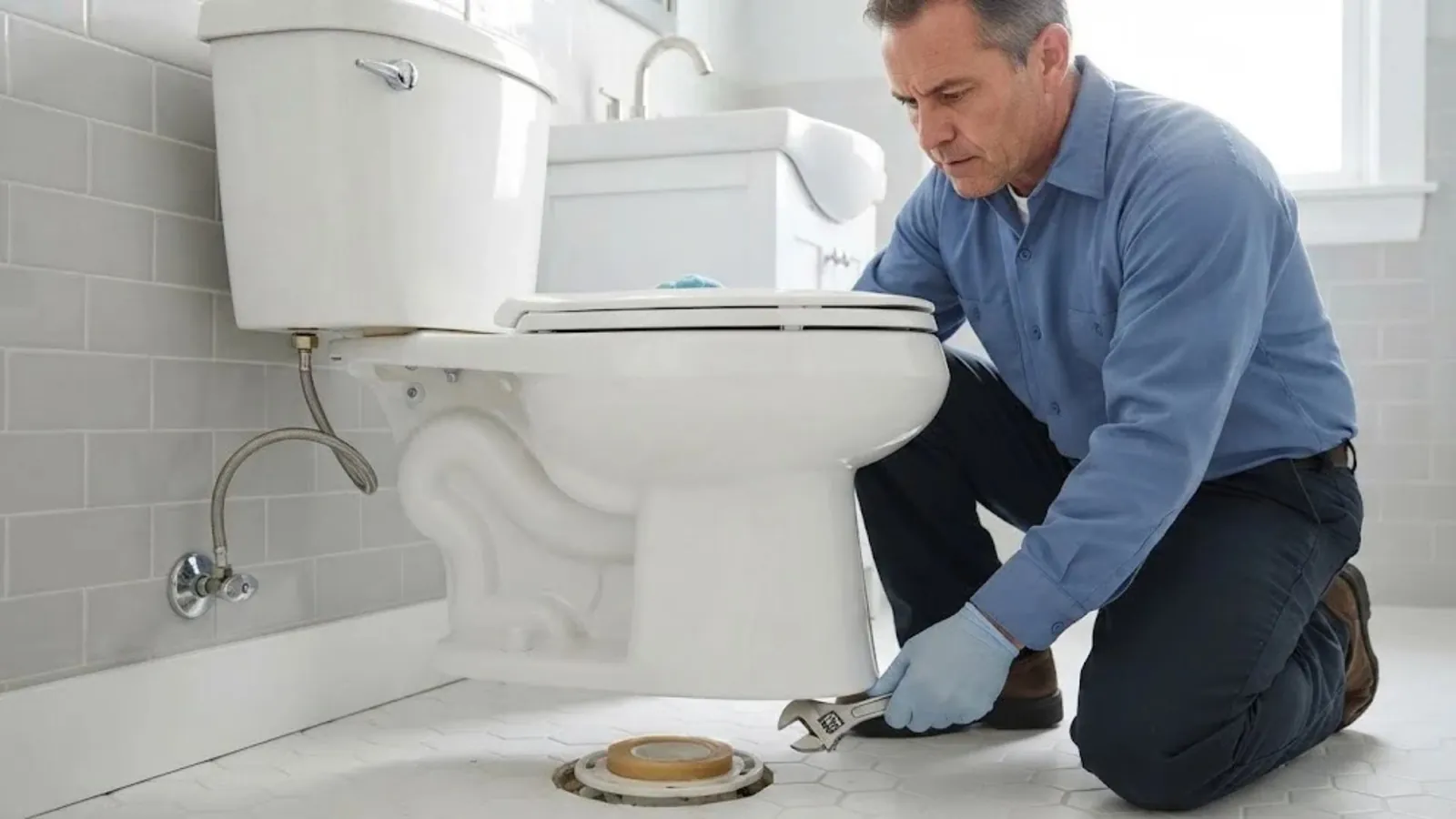
A fresh wax ring or wax-free seal goes down, the bowl is pressed level, and the bolts are tightened evenly so the porcelain does not crack.
- Connect and test
A new supply line is attached, the tank fills, and the plumber flushes several times while watching the base for weeping.
Signs a toilet should be replaced, not patched
- A hairline crack in the tank or bowl that weeps even when the water level is low.
- A worn, rough surface where stains return right after cleaning.
- A flush that stays weak after the drain is clear and the rim holes are cleaned.
- Repeated fill valve and flapper swaps within a short stretch.
- A base that still rocks with new bolts because the foot is warped.
- Parts that are no longer sold for an older model.
Septic homes and older boroughs
West Hempfield Township asks septic owners to have their pumping hauler send the pumping report to the township, which suggests septic homes are common around Silver Spring. A toilet that runs all day feeds a steady flow into that tank, so fix it quickly and keep wipes out of the bowl.
Older homes in river boroughs can mix original drains with renovated bathrooms. If you are in Marietta, a plumber serving Marietta will check the flange even when the toilet looks like the only complaint.
What affects the cost of toilet repair
Cost follows what is wrong, not the word toilet. A new flapper is a different job from a rotted subfloor, and the plumber can tell you which one you have after looking at the base. Clear price before work starts is how every job is set up.
Swapping a flapper or fill valve is a short job. A replacement adds the new toilet, seal, supply line and haul-away of the old one.
A cracked flange or soft subfloor adds parts and labor under the toilet.
Height, flush system and rough-in fit change the model you need and how it installs.
Tight bathrooms slow removal, and an after-hours dispatch differs from a scheduled visit.
Water that reached the ceiling below may need drying or another trade.
Insurance coverage varies by policy, so ask your insurer, and photograph the damage first. Pictures of the floor, ceiling and fixture help whichever way the answer goes.
Want a real number for your home? Then call (717) 349-9373 and describe the problem.
Toilet Repair questions answered
Yes. The line runs 24/7. Tell the dispatcher whether water is still escaping and where it is going, so the plumber can bring the right parts. Close the valve behind the toilet while you wait.
That pattern usually points to the wax ring or flange seal, because the bowl outlet only carries water during a flush. A loose bowl can cause it too. Stop flushing and close the supply until it is checked.
Many homeowners do. Close the supply, empty the tank and match the new valve height to the tank. Call if the shutoff will not close, the tank bolts are corroded, or the supply line looks swollen.
Put food coloring in the tank and wait ten minutes without flushing. Color in the bowl means a leak. You can also compare your meter before and after a stretch with no water use, and ask your water utility how to read it.
For a day or two, usually yes, but not for long. Each rock stresses the wax seal and can crack the flange, and a small base leak can soak the floor unseen.
Yes. Replacement is part of repair visits, and fixture swaps planned ahead of time during a remodel fall under plumbing installation.
Where the rules in this toilet repair guide come from
- According to the Pennsylvania Office of Attorney General's Home Improvement Consumer Protection Act brochure, contractors doing $5,000 or more of home improvement work in a year must register, and a written contract is required when work costs more than $500. Check any contractor at attorneygeneral.gov.
Call the 24/7 line about toilet repair
Describe the problem to the dispatcher and a licensed plumber is sent when the work is urgent.