
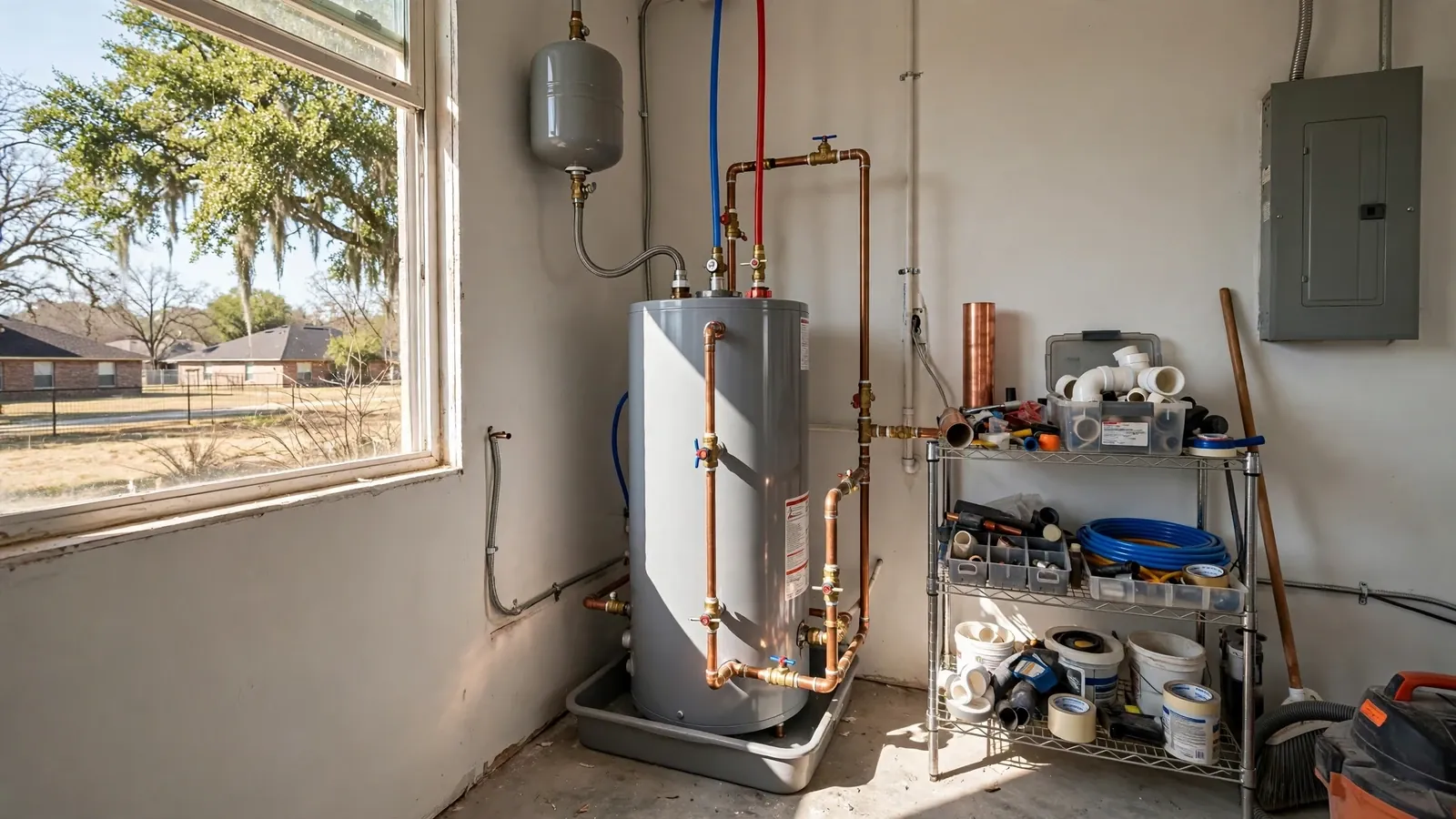
Water Heater Installation in Silver Spring, PA
Water heater installation is the planned work of choosing, placing, connecting and venting a new heater, whether for a remodel, an addition or a switch in fuel.
Licensed plumbers handle installs across Silver Spring, PA, and the nearby boroughs, with the decisions laid out before anything is ordered.
Fuel and heater type: how the options compare
The fuel decision drives almost everything else, from venting to the electrical panel. This is how the usual choices line up.
| Option | What the home needs | Main trade-off |
|---|---|---|
| Gas tank | A gas line, a flue and combustion air | Faster recovery, but venting is the biggest design item |
| Electric tank | A dedicated circuit and breaker sized to the unit | Simple to site, but slower recovery on a large demand |
| Heat pump hybrid | Open air space, a drain or condensate line and a breaker | Uses less electricity, but it is taller and needs room around it |
| Tankless gas | Gas line capacity, venting and a condensate drain | Endless hot water, but the install is heavier than a tank swap |
| Tankless electric | Large electrical service and short wire runs | No venting, but the panel must carry the load |
For tankless units, the page on tankless water heater install and service goes deeper on flow and scale.
Sizing the heater to the household
Tank capacity should follow how many people shower at once, not how big the house looks. A family that runs a dishwasher, laundry and two showers together needs more than two people who bathe at different hours. The label also lists a recovery figure, which tells you how quickly the tank rebuilds hot water after a heavy draw.
Oversizing wastes energy keeping extra water warm, and undersizing means cold showers by the third person. Bring the old label, a count of bathrooms and a note about your busiest morning to the conversation, and let the plumber match the number to the use.
Venting: where the exhaust goes
Gas heaters need a safe path for combustion gases. Older atmospheric models rise through a metal flue to a chimney or roof, while power vent and direct vent models push exhaust through plastic pipe out a side wall or the roof. Which one fits depends on the home, the chimney condition and the model chosen.
A new heater does not always reuse the old vent. Follow the maker's manual for clearances and pipe type, and ask the township zoning and permits office or its building code inspector what applies, because permit rules vary. Electric and heat pump models skip flue gases but still need correct drain and relief routing.
Expansion tank, drain pan and shutoffs
These add-ons rarely show up in a glossy product photo, yet they protect the house when something goes wrong.
Expansion tank
When a check valve or pressure regulator closes the plumbing system, heated water has nowhere to go and pressure climbs. A small tank on the cold line absorbs the swing.
Drain pan with a drain line
A shallow pan under the tank catches a slow leak, and a pipe from it to a floor drain or outdoors keeps that water from sitting. Without the line, the pan only delays the stain.
Relief valve discharge pipe
The valve opens to protect the tank, so its pipe must end where hot water can run safely and visibly.
Shutoff valves
A full-port shutoff on the cold line lets you stop the heater without closing the whole house. A gas shutoff beside gas models serves the same role.
Flex connectors
Braided hoses simplify the connection and make later service easier, but they must be sized and installed correctly.
What to do before install day
A few hours of homework can save a second trip.
- Decide the fuel and capacity, or ask the plumber to compare them during a site look.
- Clear a path from the door to the heater, and a few feet of space around the old unit.
- Find the main water shutoff and test that it turns.
- Take a photo of the old label, the venting and the existing pipes.
- Ask who handles any permit paperwork, and when the inspection is needed.
- Plan for water to be off for part of the day, and fill containers if you need them.
What an install day looks like
- Confirm the plan
The plumber checks the unit against the order, the space and the route in.
- Set up the base
The pan, a level platform and the new location are prepared before the tank moves.
- Connect the water side
Shutoff, flex lines, relief valve and expansion tank go on, and the drain run is checked.
- Complete gas or electric and vent
Gas piping is tested for leaks, or power is wired to the circuit, and the vent is sealed and sloped.
- Fill, purge and hand off
The tank fills, air is bled out and the controls are set, with a walkthrough of where the shutoffs and relief pipe are.
Permits and digging: ask first
The West Hempfield Township permit form asks whether water and sewer are public or private, and the township names a third-party code inspector. It does not mention a plumbing permit by name, so ask the zoning and permits office what your project needs.
If a new fuel line means trenching, Pennsylvania law requires contacting PA One Call at 811 at least three business days before digging, and the locate costs the homeowner nothing.
Basements, crawlspaces and attics around Landisville
Nearby Landisville averages about 45 inches of precipitation a year, which is a reason to treat any below-grade heater location with care. Raising the heater on a platform and adding a drain pan keeps a small leak from becoming a wet floor, and a sump or floor drain nearby is a plus.
Because Landisville sits in East Hempfield Township, permit and sewer questions there go to that township. Mountville and Columbia customers should ask their own borough office. Tell us your ZIP and we will point you to the right one.
Water heaters alongside other planned work
A heater install often rides along with a remodel, a softener hookup or a fixture change, and the crew can plan one visit for all of it. Our plumbing installation page covers those pieces. Combining jobs saves repeat shutoffs, but each part still needs its own testing.
What shapes the price of a water heater installation
Two installs of the same model can cost very different amounts because the surroundings differ. Venting, fuel changes and access do most of the work behind the number. Clear price before work starts means those items appear in writing.
Tankless and heat pump models cost more to buy and to install than a basic tank.
New flue runs, wall penetrations and condensate lines add parts and labor.
A new gas line or a larger breaker and wire run changes the scope.
Expansion tank, pan, discharge pipe and shutoffs are separate items on the list.
An attic, tight closet or stair path slows the crew and raises labor.
Coverage varies by policy, so ask your insurer if you are installing after a loss, and keep the old label and photos of the site.
Planning ahead and want a real number? Then call (717) 349-9373 and describe the project.
Water Heater Installation questions answered
It depends on the plumbing. If a check valve, backflow device or pressure regulator makes the system closed, thermal expansion has nowhere to go, and a tank is usually added. The plumber can test the pressure and tell you.
To a floor drain or to the outside, never to a spot that cannot be seen. A pan that fills and overflows still stains the floor. Ask where the nearest safe drain sits when you plan the location.
Gas, venting, electrical hookups and relief piping are all places where an error is dangerous. A homeowner can handle prep like clearing the area, but the connections and testing belong to a licensed plumber. Permit rules vary, so ask the township or borough office.
Start with what the house already has. A gas line and flue make a gas tank easy. Without them, an electric or heat pump model avoids new venting. Fuel cost, space and your panel capacity decide the rest.
Yes, in timing and focus. Installation is planned, so you compare options, while replacement of a failed tank is driven by a leak or a cold shower and usually keeps the same fuel and size.
Pennsylvania requires a written contract when work costs more than $500. Ask whether the plumber handles permits and what the venting plan is. Contractors doing $5,000 or more of home improvement in a year must register, so check the Pennsylvania Attorney General registration at attorneygeneral.gov, and ask us the same.
Where the rules in this water heater installation guide come from
- According to the Pennsylvania Office of Attorney General's Home Improvement Consumer Protection Act brochure, contractors doing $5,000 or more of home improvement work in a year must register, and a written contract is required when work costs more than $500. Check any contractor at attorneygeneral.gov.
Book water heater installation with one call
Tell the dispatcher about your home and ask for a same-day appointment when available.