
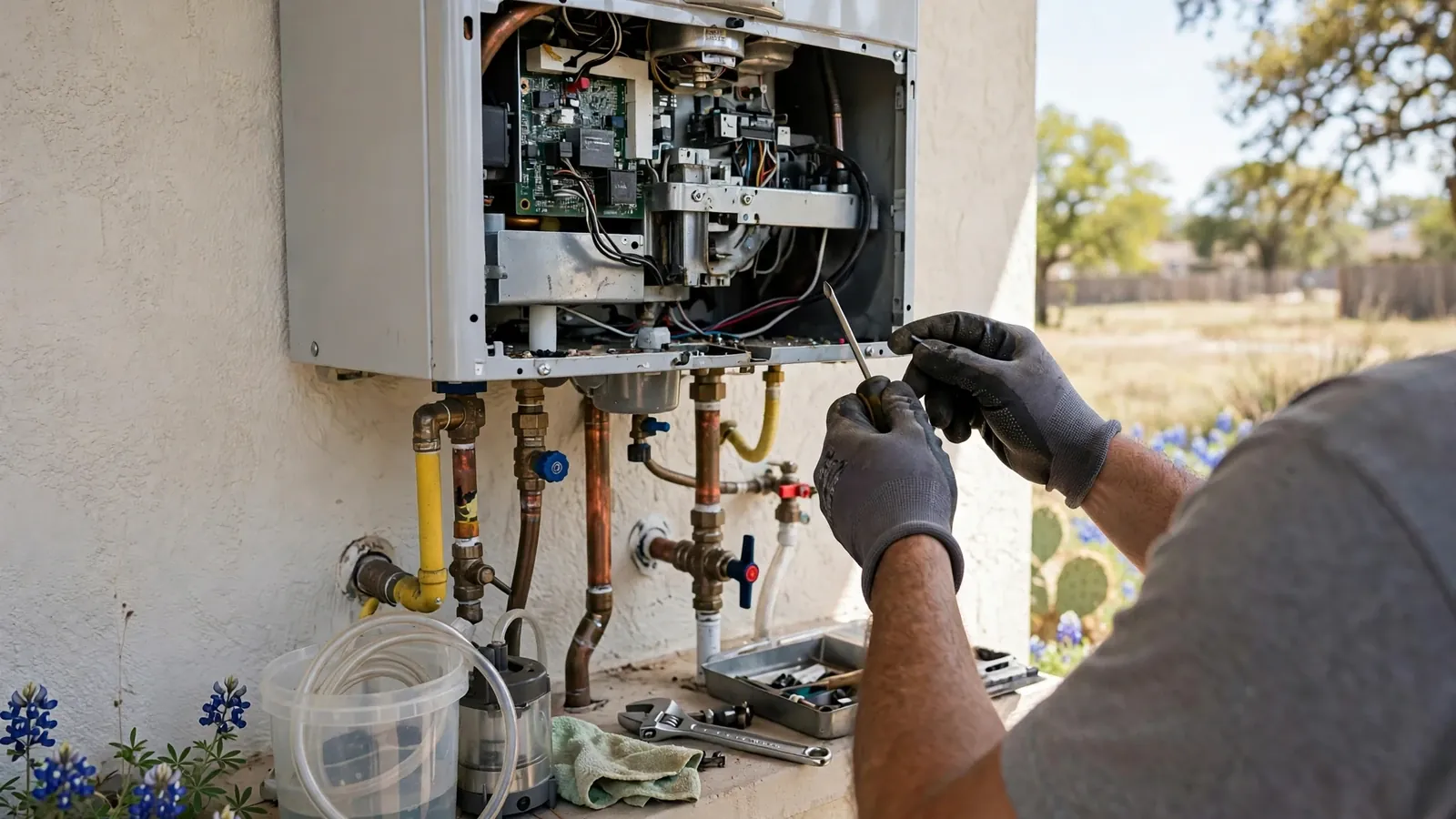
Tankless Water Heater in Silver Spring, PA
A tankless water heater warms water only while a tap is open, using a gas burner or electric elements instead of a stored tank.
Licensed plumbers install, repair and flush tankless units in Silver Spring, PA, and the sections below start with the symptoms people actually notice.
Hot water that turns cold, arrives late or shows an error code
Most tankless problems begin as a feeling in the shower. The water runs hot, dips cold for a few seconds, then recovers, or it takes a long time to arrive, or the display shows a code and the burner stops.
These symptoms usually trace to scale in the heat exchanger, a clogged inlet screen, flow that is too low to fire the unit, or a venting or gas supply fault. That is the work of tankless water heater service: installing the unit correctly, repairing what failed and flushing out scale before it does damage.
Tankless symptoms and what usually causes them
| Symptom | Probable cause | Next step |
|---|---|---|
| Cold burst between hot water uses | Short run times, or a second tap pulling flow | Wait a moment between draws, then ask for a flow check |
| Hot water never arrives | Scale, a clogged inlet screen or a closed valve | Check service valves and the inlet filter, then call |
| Error code on the display | Ignition, flow sensor, vent or temperature sensor fault | Write down the code and model, and check the manual |
| Water too hot or swinging | Failing sensor or buildup inside the exchanger | Stop use if scalding, and book a service visit |
| Loud rumbling or whistling | Scale in the heat exchanger or restricted water flow | Ask about a descale flush |
| Heater runs but gas smells wrong | Combustion or venting trouble | Treat it as a gas safety issue, not a hot water issue |
Flushing and descaling a tankless heater
As water heats, dissolved minerals can settle on the inside of the heat exchanger as scale. A thin crust slows heat transfer, narrows passages and makes the unit work harder, which shows up as a lower flow, a fault code or a higher bill. A flush circulates a descaling solution, often a mild acid such as white vinegar when the maker allows it, through the exchanger to dissolve those deposits.
How often to do it depends on your water and on the unit. Follow the maker's manual for the interval, and do not guess at a number. Water hardness here is not something we can state, so test your tap and ask your water utility for its annual water quality report. Homes on a private well often need to watch scale and sediment more closely.
What a tankless flush visit involves
A flush needs isolation valves, which let you route fluid through the unit without draining the house. If your install lacks them, they can be added during the first service.
- Power down and close the supply
The unit is switched off, the gas supply is closed and the water valves are set to isolate it.
- Connect a circulation pump and hoses
Hoses connect the service ports to a pump and a bucket of descaling solution.
- Run the solution through
The fluid is circulated for the time the maker's manual calls for, then checked for color and debris.
- Rinse and clean the inlet filter
Clean water flushes the solution out, and the screen is pulled and rinsed.
- Restore and test
Valves reopen, the unit relights and the plumber checks flow, temperature and venting.
Do not run chemicals through a unit the maker has not approved them for. Scale can also hide a failed sensor, so a flush is a good time for a full check.
Installing a tankless unit instead of a tank
A tankless install is a bigger project than a tank swap. A gas unit often needs a larger gas line, special stainless or plastic vent pipe and a condensate drain. An electric unit may need a heavy circuit that the panel cannot always carry.
The plumber who comes out can size the unit to your fixtures and the cold incoming water in winter. For fuel, venting and expansion choices that apply to every heater type, see water heater installation planning.
Is tankless a fit for your home?
Tankless suits some houses and strains others. These questions help decide.
- How many fixtures run together at the busiest hour, and can one unit keep up?
- Does your gas line have the capacity, or would it need upsizing?
- Is there a safe route for venting through a wall or roof?
- Can the electrical panel carry an electric unit's load?
- Is the water supply clean, or does sediment or hardness need treating?
- Would you keep hot water during a power outage? Most units, including gas models, need electricity.
Tankless repair: error codes, sensors and ignition
Common repair items include the igniter, flame sensor, flow sensor, temperature sensors, vent fan and the condensate trap. A pinhole leak in the heat exchanger or a failed control board are bigger fixes and sometimes mean replacement.
Each maker uses its own codes, so write down the code and model number and follow the manual. If the symptom matches a tank-style issue such as a leak or a pilot, our water heater repair page describes the common diagnostics.
Before you call about an error code
Photograph the display, note what you were doing when it appeared and check that the gas valve and the water valves are open. If you smell gas at any point, leave the building, then call your gas utility or 911 from outside before you call us.
Older borough piping and tankless flow in Columbia
Columbia's streets were laid out long before modern plumbing, so a home there may still have galvanized steel supply lines or old cast iron drains. Flaking pipe scale and rust can clog the small inlet screen on a tankless heater faster than clean copper or PEX would.
Columbia Water Company serves the borough, so check your bill to confirm your supplier. Customers in Columbia, about 3 miles southwest of Silver Spring, can ask for an inspection of the supply piping before a tankless unit goes in.
What affects tankless water heater pricing
Tankless pricing swings widely because the unit itself is only part of the project. The gas line, vent, drain and electrical work around it often decide the total. Clear price before work starts means the scope is itemized first.
A flush is a modest visit. A new install touches gas, vent, water and power.
Upsizing a line or running special vent pipe adds parts and labor.
Missing service valves must be added before a flush can be done properly.
Heavy buildup can mean longer circulation time or a second pass.
Boards and exchangers vary by maker and may need ordering.
Coverage varies by policy, so ask your insurer about water damage, and photograph the unit, the serial label and the venting.
Want a real number for your tankless unit? Then call (717) 349-9373 and give us the model.
Tankless Water Heater questions answered
The unit may shut off when flow drops too low, so a cold gap appears before it relights. It can also reflect scale, a partly clogged inlet screen or a second tap competing for flow. A plumber can test flow and check the screen.
The unit has stopped itself for a reason, often ignition, flow, venting or a sensor. Write down the code and model, check that gas and water valves are open, and call. Do not keep resetting a unit that keeps locking out.
Follow the maker's manual for the interval, since it depends on the unit and on your water. Test your tap and ask your water utility for its water quality report. Cloudy, gritty or scale-laden water suggests flushing sooner.
Some owners do, if isolation valves exist and the manual describes the method. The risks are scalding water, gas left on and the wrong chemical. If you are unsure, have a plumber do it the first time.
Usually not. Even gas models rely on electricity for the fan, ignition and controls. If outages are a concern, ask about a battery backup option or a tank model.
Rarely. Venting, gas supply, electrical capacity and a drain for condensate may all be different. A site visit confirms what the swap would require, and replacement of a failed tank is the simpler route when time is short.
Where the rules in this tankless water heater guide come from
- According to the Pennsylvania Office of Attorney General's Home Improvement Consumer Protection Act brochure, contractors doing $5,000 or more of home improvement work in a year must register, and a written contract is required when work costs more than $500. Check any contractor at attorneygeneral.gov.
Book tankless water heater with one call
Tell the dispatcher about your home and ask for a same-day appointment when available.