
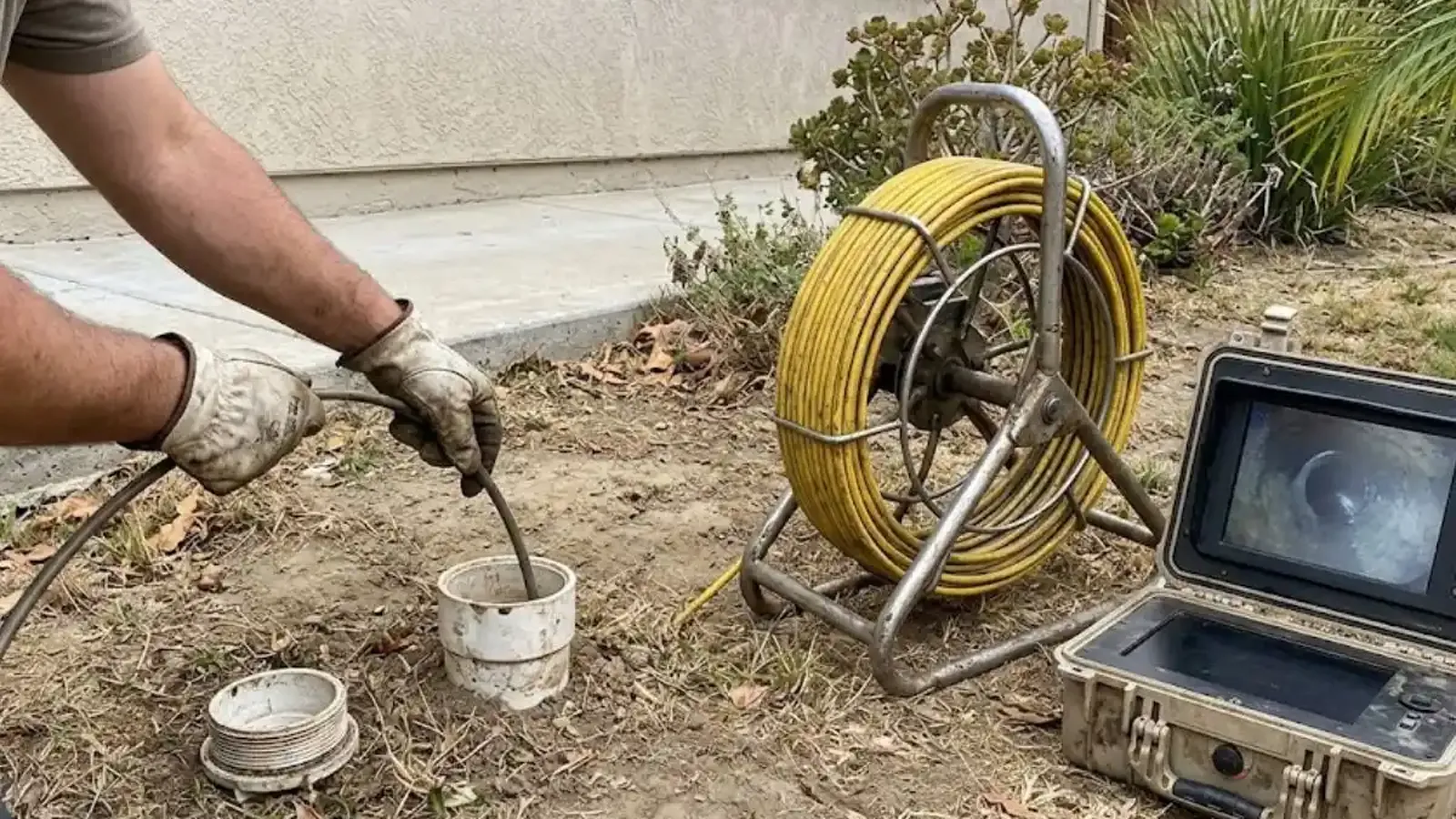
Sewer Camera Inspection in Silver Spring, PA
A sewer camera inspection is a planned look inside your sewer line, using a waterproof camera on a flexible rod that records video as it travels. In Silver Spring, PA, a licensed plumber can schedule one, with same-day appointments when available.
What the camera can and cannot see
The camera shows the inside of the pipe: roots at joints, cracks, offset sections, standing water in a sag, scale in old cast iron and debris such as grease or wipes. It also shows where branches join and whether the pipe changes material along its length.
It cannot see through a full blockage, so the line is usually cleared first. It does not show the soil around the pipe, and a hairline crack can look like a shadow. The footage tells you what is wrong. Whether it needs sewer line repair is a second decision.
When an inspection is worth doing
A camera visit earns its cost when the answer changes what you do next.
- You are buying a home and nobody can say how old the sewer line is or what it is made of.
- A line has backed up more than once, and each cleaning only helps for a while.
- Someone has proposed lining or digging, and you want to see the damage first.
- You plan a remodel, an addition, a patio or a pool near the line.
- A cleaning brought up roots, scale or flakes of pipe.
- You do not know where the line runs or where its cleanout is.
How a typical inspection goes
Common methods are consistent, though equipment differs by company.
- Pick the access point
A cleanout is best. Without one, the plumber may need to remove a toilet or use a roof vent to enter the line.
- Clear the line if needed
Grease, paper or debris blocks the lens, so a cable or hydro jetting pass may come first.
- Push the camera along the pipe
The operator watches a monitor, notes the distance on a counter, and stops at anything unusual.
- Locate and mark
Many camera heads carry a transmitter that a handheld receiver tracks above ground, marking the position and depth of problems.
- Review the footage
The plumber who comes out explains what the recording shows and what, if anything, should be done.
Reading what the camera finds
Footage is only useful if it ends in a decision. This table matches common findings to what they mean.
| What the camera shows | What it usually means | Typical next step |
|---|---|---|
| Fine roots wrapped around a joint | The joint is open and letting in moisture | Cutting now, sealing or lining the joint if it returns |
| A step where two pipes meet | Joint has shifted, often from settling | Watch it if flow is steady, repair if debris collects there |
| Water standing in a section | A sag, called a belly, is holding wastewater | Cleaning will not fix it, so plan a repair if it recurs |
| Flaking, rusted walls in iron pipe | Scale and corrosion are narrowing the line | Descale, monitor, or replace sections, based on wall condition |
| A crack along the pipe | The wall is broken and may leak or admit roots | Spot repair or lining, based on length |
| The picture stops and the pipe ends | Collapse or a missing section | Locate the spot and plan excavation |
Buying a home: check the line before closing
A sewer line replaced in a hurry after closing is a bad surprise, and an inspection lets you catch it before that point. Ask for the recording and a written note of the findings so you can show them to the seller or your agent.
Be realistic about what the video proves. It shows the pipe on the day of the visit. A clean line today does not promise a clean line in five years, and a flagged defect may be minor. Ask the seller whether the line has ever been cleaned or repaired.
Locating a line or cleanout before you dig
Planning a patio, a tree or a trench near the house? Knowing where the sewer runs avoids a very expensive mistake. The transmitter on the camera head lets the plumber trace the route and mark it on the ground.
Pennsylvania law requires a call to 811 at least three business days before excavation, but that service is for utility-owned lines. A private sewer pipe often needs its own locate, so ask your plumber to mark it before the shovel goes in.
Septic homes: what the camera covers
On a septic system, the camera can inspect the line from the house to the tank inlet. It does not show the condition of the tank or drain field. West Hempfield Township asks septic owners to send pumping reports to the township, so keep your latest one handy and hand it to the plumber.
Older lines in Landisville, Columbia and Silver Spring
Columbia's streets were laid out in the 1700s, and river boroughs often mix old and renovated houses. A renovated bathroom can sit on a clay or cast iron line that nobody has looked at in decades. A baseline inspection in that case is a modest step compared with a surprise backup.
Landisville, about 2 miles northeast of Silver Spring, belongs to East Hempfield Township, so permit and sewer questions there go to that township's office. If you are buying or fixing a home there, the Landisville plumber page lists nearby ZIPs, and the plumber can tell you which office to call. Where roots are the culprit, main line cleaning is the usual first fix.
What goes into the price of a camera inspection
An inspection is priced by the time and equipment it takes, and the line itself drives most of that. A short, accessible run with a cleanout takes less time than a long run with no access.
A cleanout makes entry simple. Entering through a toilet or vent takes longer.
A long run with bends takes more time to traverse and record.
If the line is blocked or heavily coated, a cleaning pass has to happen first.
Tracing the route and depth above ground is an added step.
A copy of the video and a written summary take extra time to prepare, so ask what is included.
Coverage for sewer inspection or the damage it finds varies by policy, so ask your insurer, and photograph the damage first if you have any. Keep the video and notes with your home records.
Wondering what an inspection would cost for your house? Then call (717) 349-9373 and tell us what prompted it.
Sewer Camera Inspection questions answered
Often yes, especially for an older home or one with large trees nearby. A bad line is costly to fix and easy to miss from the surface. The video gives you facts to use in negotiation before closing.
Properly used, it is a gentle tool. The rod is flexible and the camera head is smooth. The real risk is forcing it through a collapsed section, which a careful operator avoids.
You should. Ask any company before booking whether the recording and a written summary are included and how they are delivered, and ask us the same question.
The plumber clears it first, usually with a cable or jetting pass, and then runs the camera. If cleaning does not open the line, that tells you something is badly wrong.
It finds cracks, open joints and missing sections that leak. It cannot see water moving through the soil outside the pipe, so a wet spot in the yard still needs interpretation.
There is no fixed schedule. A baseline look is sensible when you buy, and another follows any repeat backup, root cleaning or nearby construction. Lines with root history are worth rechecking at intervals the plumber suggests.
Where the rules in this sewer camera inspection guide come from
- According to the Pennsylvania Office of Attorney General's Home Improvement Consumer Protection Act brochure, contractors doing $5,000 or more of home improvement work in a year must register, and a written contract is required when work costs more than $500. Check any contractor at attorneygeneral.gov.
Book sewer camera inspection with one call
Tell the dispatcher about your home and ask for a same-day appointment when available.