
Emergency Sewer Line Cleaning in Silver Spring, PA
Sewer line cleaning is the clearing of the main pipe that carries all of a home's wastewater to the street sewer or septic tank. In Silver Spring, PA, our 24/7 line sends a licensed plumber when a backup will not wait.
Sewage backing up: what to do first
Our line answers 24/7 and offers same-day appointments when available. A main line backup is different from a slow sink. Wastewater has nowhere to go, so it rises through the lowest opening in the house, usually a basement floor drain, a shower or a ground-floor tub.
Make the call early, then protect the house and the people in it. If sewage is surfacing in the yard instead, or the smell is strongest outdoors, say that on the phone.
- Stop every source of water. That means no flushing, laundry, dishwasher or showers, since each gallon goes straight to the lowest opening.
- Keep people and pets out of the wet area. Sewage carries bacteria, so wear rubber boots and gloves if you must cross it.
- Stay away from outlets, power strips and appliances sitting in water. Switch off the breaker only if you can reach it from dry ground.
- Do not mix bleach with other cleaners. The fumes are dangerous in a closed basement.
- Lift rugs, boxes and anything porous out of the wet zone before it soaks through.
- Photograph the floor, the drain and the waterline before any cleanup.
Where the sewage shows up and what that tells us
The first place a backup appears says a lot about where the blockage sits. Describe it to the dispatcher in these terms.
| What happens | What it suggests | What to mention on the call |
|---|---|---|
| Basement floor drain bubbles when the washer upstairs drains | Main line blocked below the branches | Which appliance was running |
| A tub rises when you flush a toilet | Blockage past the point where branches join | Which floor the tub is on |
| One bathroom backs up, the rest work | A branch for that room, not the main | Which room and which fixtures |
| Neighbors report the same trouble | Possible problem in the public main | Which neighbors, and when it began |
| Water at the cleanout cap in the yard | Line full to the surface, or broken near the cleanout | Where the cap is and what is leaking |
| Backups appear only after heavy rain | Storm water getting into the sewer or a weak joint | The date and how hard it rained |
How a plumber reaches and clears a blocked main
- Confirm the problem is the main
The plumber runs water at several fixtures and checks the lowest drain to see where the line is full.
- Open the cleanout with care
A backed-up line holds pressure, so the cap is loosened slowly from the side while sewage is directed into a container or drain.
- Run a heavy cable
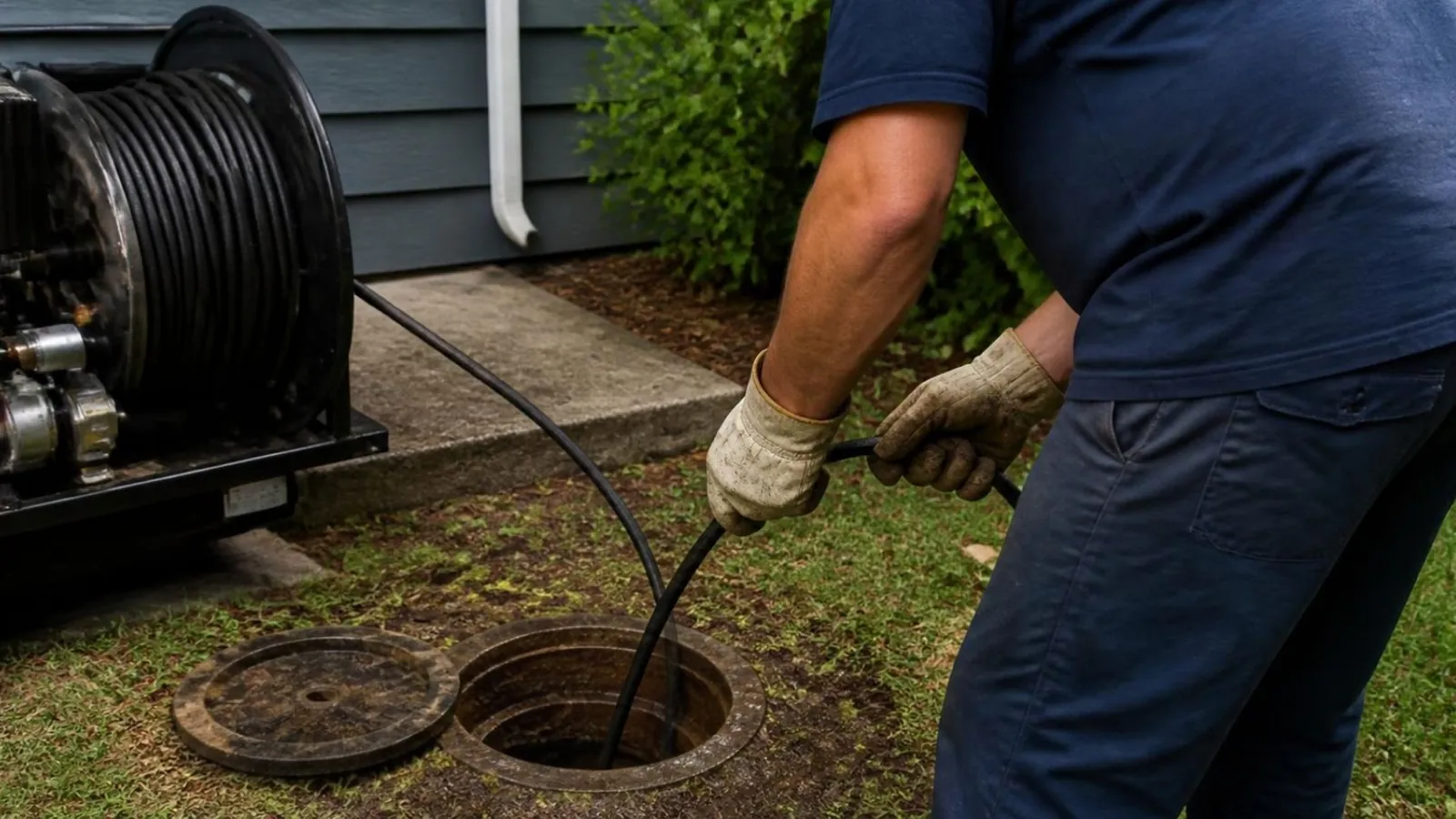
A drum machine feeds a larger cable with a cutting head toward the blockage, usually tens of feet along the line.
- Read what comes back
Roots, wipes, grease balls, toys and paper look different, and each points to a different long-term fix.
- Flush and test
A rinse with water confirms the line runs freely, and a camera pass is recommended when the blockage was severe.
Why main lines stop
Most main line blockages come from a short list of causes. Knowing which one applies decides whether cleaning is enough.
- Roots entering through a joint and catching paper.
- Wipes sold as flushable, which hold together in the pipe.
- Grease that washed down the kitchen and hardened farther along.
- A low spot in the pipe where solids settle and build up.
- Heavy scale inside old cast iron narrowing the opening.
- A broken or offset section that snags everything passing by.
Main sewer cleaning, sewer drain cleaning and what the names mean
People use main sewer cleaning, sewer drain cleaning and sewer rodding for the same basic job: clearing the large pipe that leaves the house. What separates it from fixture work is size and reach. The pipe is four inches or wider, the blockage may be well out in the yard, and the equipment is heavier.
If only one sink or tub is slow, fixture drain cleaning is the right visit. If the main keeps filling every few months, high-pressure water usually keeps it open longer, and our hydro jetting service explains how that works.
Storm drains, yard drains and downspout lines
Nearby Landisville averages about 45 inches of precipitation a year, and that water has to go somewhere. Many properties have buried downspout lines or yard drains that collect leaves, silt and roots. When those fill, water pools by the foundation, which can end up in a basement.
These lines are separate from the sanitary sewer, and they should stay separate. A plumber can cable or flush a storm line and trace where it exits. If rain-driven water is entering the sewer instead, that is a diagnosis job and the camera comes first.
Public sewer or private system: check before you assume
The West Hempfield Township permit form asks owners to mark sewer as public or private, so find out which you have. If neighbors on your street are backed up too, ask the township office whether the main is public. Septic owners should also say so on the call, because a full tank can mimic a clogged line.
When cleaning is not enough
A line that needs clearing twice a year is telling you something. A camera shows whether roots, a sag or a crack is behind it, and the answer decides if cleaning is enough or if sewer line repair makes more sense.
Homes along Route 23, in Silver Spring and over in Mountville, fall under the same dispatch line. Our Mountville service page lists the nearby ZIPs, and the dispatcher can confirm your street when you call.
What goes into the price of clearing a main line
The price of clearing a main depends on how far the blockage is from the cleanout, what it is made of and whether the line can be reached cleanly. Cleaning up the floors afterward is separate work from clearing the line.
A clog twenty feet out is a shorter job than one at the property line.
A working cleanout lets the plumber start quickly. Without one, a toilet may need to be pulled to reach the line.
Soft paper clears fast. Dense roots or a mass of wipes take heavier tools and more passes.
A look after cleaning adds time but separates a simple clog from a failing pipe.
Overnight dispatch for an active backup is a different call from a booked daytime visit.
Coverage for a sewer backup varies by policy, so ask your insurer, and photograph the damage first. Many policies treat backup differently from other water damage, which is why the photos and the date matter.
Want a clear price before work starts on your line? Then call (717) 349-9373 and tell the dispatcher where the sewage is showing.
Sewer Line Cleaning questions answered
Yes. The line is staffed 24/7, including holidays. Tell the dispatcher where the sewage is showing and whether it is still rising, and use the first-steps list above while you wait for the plumber to arrive.
Yes. It can carry bacteria and viruses, so avoid skin contact, wear gloves and boots, and wash well afterward. Porous materials like carpet and drywall that stayed wet with sewage are often removed rather than cleaned.
No. Every flush and every load of laundry sends more water into a line that is already full, and it will end up on the floor. Stop water use until the line is open.
Fixture drain cleaning addresses one sink, tub or toilet branch. Sewer line cleaning clears the large main pipe that all branches empty into, with heavier cable and often a camera or jetting.
A seasonal pattern often points to roots, which grow actively in warm months, or to groundwater and storm water entering a weak joint. A camera look after the next cleaning tells you which, and whether it needs a repair.
Note the date and how hard it rained, then have the line checked. The cause may be a blocked sewer, a storm drain connected where it should not be, or water entering through a damaged section. Report the pattern so the plumber looks in the right place.
Where the rules in this sewer line cleaning guide come from
- According to the Pennsylvania Office of Attorney General's Home Improvement Consumer Protection Act brochure, contractors doing $5,000 or more of home improvement work in a year must register, and a written contract is required when work costs more than $500. Check any contractor at attorneygeneral.gov.
Call the 24/7 line about sewer line cleaning
Describe the problem to the dispatcher and a licensed plumber is sent when the work is urgent.