
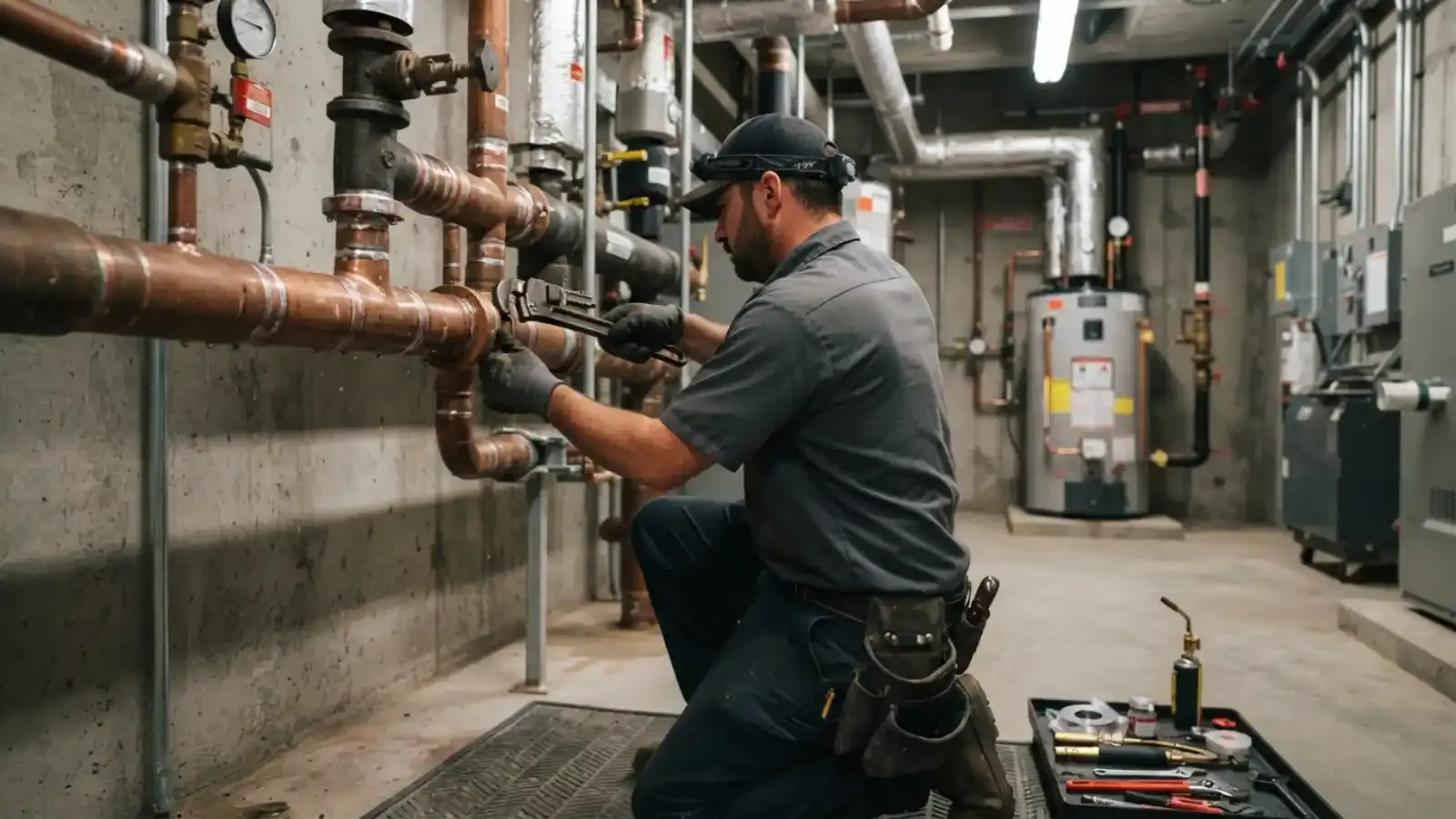
Emergency Commercial Plumbing in Silver Spring, PA
Commercial plumbing in Silver Spring, PA is plumbing work at small businesses, offices, restaurants and rental properties. Our 24/7 line sends licensed plumbers after closing time, on weekends and between tenants, when a leak or backup cannot wait for Monday.
Commercial leak or backup after hours
Call the same night if water is spreading across a floor, a toilet room is overflowing, or sewage is rising in a floor drain. Same-day appointments are offered when available, and the after-hours line is open 24/7. Most of the first few minutes belong to the person on site.
If you are unsure where water is coming from, say so. A hidden line under a slab or behind a wall needs a different approach than a burst fitting, and the plumber who comes out will start with leak detection when the source is not obvious.
- Close the main water valve for the building or suite, and note where it is for staff.
- Move inventory, files and electronics out of the water's path, and keep people away from standing water near outlets.
- Do not use restrooms or sinks if sewage is backing up, and block off the area.
- Photograph the damage, the floor drain and any stained ceiling tiles before cleanup.
- Tell the landlord or property manager at once if you are a tenant.
What commercial plumbing covers here
Small commercial buildings behave differently from houses. They have more fixtures on shared lines, longer drain runs, floor drains in back rooms and, often, equipment such as water heaters and dishwashers that run all day. A blockage in a back-of-house line affects the whole business.
Typical calls come from restaurants and cafes, salons, offices, small retail, workshops and landlords with rentals or small multi-unit buildings. If your problem is a clogged kitchen sink in a rental house rather than a business, the guidance in clogged drain service fits that case too.
Commercial leak detection: what is realistic
A leak that keeps a meter turning when the building is empty is the standard sign. Common methods include shutting off branches one at a time, pressure testing a line, listening for flow with acoustic gear, checking walls with a moisture meter and thermal camera, and running a camera into drains. Ask any company whether it has the equipment before booking, and ask us the same question.
Detection narrows the search, and it does not always name an exact spot. Concrete floors, long runs and several tenants on one meter can slow the results. Expect to be told what is confirmed, what is likely and what remains unknown.
After-hours problem, likely cause, first move
| What is happening | Likely cause | First move for the business |
|---|---|---|
| Floor drain bubbles or rises | Main line or branch blockage | Stop using fixtures on that line and call |
| Kitchen sink and prep drains slow, odor | Grease trap or interceptor full | Pause dishwashing and call |
| Water on the floor near a restroom wall | Failed supply line, valve or wax seal | Close the fixture shutoff, then the main if it persists |
| Meter runs with the shop closed | Hidden supply leak | Shut off the main and request leak detection |
| Sump or lift pump alarm sounding | Float stuck, pump failed, or discharge blocked | Limit water use and call |
| Water heater drips or tank puddles | Tank failure or relief valve discharge | Turn off the heater and the cold feed |
Grease trap cleaning
A grease trap, or interceptor, slows hot wastewater from kitchen sinks and dishwashers so fats cool and float before they reach the sewer. When it fills, grease escapes into the drain and clogs it. Signs include slow sinks, a sour smell near the trap and gurgling after the dishwasher runs.
Cleaning means pumping out the grease and solids, scraping the walls and baffles, and checking the lids and seals. How often depends on how much you cook and what goes down the drain, not on a set calendar. Ask your sewer authority or pumping hauler what records they want, and keep the service receipts. Recurring kitchen clogs beyond the trap are a sewer line cleaning question.
Backflow testing (planned work)
A backflow preventer is a valve assembly that keeps water in the building from flowing backward into the public supply. Fire sprinkler lines, irrigation, boilers and some commercial equipment use them. A test checks that the internal check valves still seat.
This is scheduled work, not an after-hours call. Ask your water utility whether your property needs a test, how often, and which testers it accepts. Plan the visit for a slow period, because the water is shut off briefly. If a device fails, repair parts or a replacement come next, and a retest follows.
Floor drain overflow and lift pump trouble
A floor drain in a mechanical room or basement is a trap for stray water. When it overflows, the usual cause is a blocked building drain or a sewer line backed up past the building. Sewage in a floor drain is a health hazard, so keep staff away, do not mop with bare hands, and report it at once.
Restrooms below the sewer level often rely on a lift pump or ejector pit. When the float sticks, the pump burns out or the discharge line clogs, the pit rises and alarms. Switch off the pump if you smell burning. A well-maintained pit needs its cover sealed, the check valve working and the alarm tested, which a planned visit can cover. Backups reaching the main line fall under main line cleaning.
How an after-hours commercial call runs
- Describe the building
Give the address, the type of business, what is leaking or backing up, and where the main valve is.
- Isolate and protect
You close the water or stop fixture use while the dispatcher assigns a licensed plumber.
- Find the cause
The plumber checks the visible lines first, then runs tests or a camera if the source is hidden.
- Stabilize
A temporary fix, a capped line or a cleared drain stops the damage even when a full repair needs parts.
- Document
Ask for notes on what was found, which help with the landlord, tenant or insurer.
Older downtown buildings
Lancaster is the county seat, and its commercial buildings range from historic to modern. An older building may have mixed pipe materials, unmarked shutoffs and floor drains nobody has opened in years. If you manage property there, a plumber serving Lancaster can help you map the shutoffs before a leak forces the issue.
Columbia's streets were laid out long before modern plumbing, so the same advice applies along the river. Tag your valves and keep a written location sheet for staff and tenants.
What affects commercial plumbing cost
Commercial jobs vary more than residential ones because buildings differ so much. A single failed fitting in an open mechanical room is quite different from a leak under a slab that serves four tenants. Clear price before work starts, and large jobs should be set out in writing.
A repair, a detection visit, a trap pump-out and a backflow test each take different time and equipment.
Multiple floors, tight chases and shared walls increase the time to trace a line.
Night and weekend dispatch differs from a scheduled day visit, and planned work can be scheduled around your hours.
Pumps, interceptors, backflow assemblies and commercial water heaters carry their own parts.
A line serving several tenants may require coordination with the owner before work starts.
Commercial coverage varies by policy, so ask your insurer, and photograph the damage first. Business policies often have notice steps, so read yours soon after the incident.
Want a real number for your property? Then call (717) 349-9373 and describe the problem.
Commercial Plumbing questions answered
Yes. The line runs 24/7 for small businesses and rentals. Give the address, the business type and what is happening, and close the main valve if water is spreading. Same-day appointments are offered when available.
Yes. Many calls come from a manager or owner. Give the plumber the unit number, the tenant's contact for access, and whether the tenant should be home. Say who authorizes the work so the plumber knows who to ask about changes.
That depends on the lease, so check it first. The plumber will want a name to confirm the scope, and many tenants call the manager before the plumber. Send the manager photos of the damage.
Keep one contact per building, list each unit with its issue and note shared shutoffs. A plumber can then group visits, find out whether the problem is in the unit or the stack, and avoid repeat trips.
Testing is planned work. How often depends on your water utility and the device, so ask the utility before scheduling. The plumber who comes out checks the assembly and reports what failed.
Often, but it depends on your lease and local rules. Ask your landlord and your sewer authority who maintains the trap and who holds the service records.
Where the rules in this commercial plumbing guide come from
- According to the Pennsylvania Office of Attorney General's Home Improvement Consumer Protection Act brochure, contractors doing $5,000 or more of home improvement work in a year must register, and a written contract is required when work costs more than $500. Check any contractor at attorneygeneral.gov.
Call the 24/7 line about commercial plumbing
Describe the problem to the dispatcher and a licensed plumber is sent when the work is urgent.