How to Snake a Clogged Toilet in Silver Spring, PA
To snake a clogged toilet, use a closet auger, a short snake with a protective sleeve, and work it through the trap with slow turns. This guide for Silver Spring, PA homes covers plunging first, the auger steps, and the signs that the clog is not in the toilet at all.
The short answer: plunge first, then use a closet auger
Start with a flange plunger, which has a rubber extension that seals the bowl outlet. Most toilet clogs give way after a few firm pumps. If the water stays high afterward, a closet auger is the right snake.
A closet auger, also called a toilet auger, pairs a short cable with a rigid shaft and a rubber sleeve that protects the porcelain. A standard drain snake from the hardware aisle can scratch the bowl and is hard to steer through the curved trap. The auger is built to reach the trap, which is where most toilet clogs live. Keep your expectations small: it clears the toilet's own passage, not the house drain.
What to gather before you start
- A closet auger and a flange plunger.
- Rubber gloves, eye protection and old shoes.
- Towels or a plastic sheet to cover the floor around the base.
- A bucket for bailing water and a second one for testing the drain.
- A flashlight and a disinfectant cleaner for afterward.
- A trash bag for anything you pull out.
How to snake the toilet, one slow turn at a time
- Stop flushing and check the level
If the bowl is close to the rim, bail some water into a bucket. Do not flush again to test it.
- Set up the area
Lay towels around the base, put on gloves, and pull the auger cable back so the tip sits inside the shaft.
- Seat the sleeve
Place the rubber sleeve into the bowl outlet with the curved tip pointing down into the drain opening.
- Feed the cable
Push the cable out while turning the handle clockwise, slowly, until you feel resistance.
- Work the clog
Crank and push in small motions. If it breaks apart or hooks onto something, ease it back out instead of yanking.
- Retract and test
Crank the cable back in while pulling, wipe it clean, then pour a bucket of water into the bowl to see if it drains before you flush.
What kind of clog you probably have
Where the water goes, and where it does not, tells you whether this is a toilet problem or a line problem.
| What you see | Where the clog likely is | What to do |
|---|---|---|
| Only this toilet is slow or blocked | In the trap or outlet | Plunge, then use the auger |
| Water rises in the tub or shower when you flush | In the main drain or sewer line | Stop using water and call |
| Toilet gurgles and a nearby sink bubbles | A partial blockage in the branch drain or a venting issue | Stop flushing and call |
| The clog returns after a few days | A partial blockage deeper in the line, or an object left in the trap | Snake once more, then call if it returns |
| Something solid was flushed | An object lodged in the trap | Do not push it further, and call |
| The cable spins freely and nothing changes | A clog deeper than the auger reaches | Call for a longer cable or a camera |
A single clog in a single toilet is a household fix. A pattern across fixtures is a plumber's problem.
Mistakes that make a clogged toilet worse
- Pouring chemical drain opener into standing water, which can splash caustic liquid when you plunge or snake.
- Flushing again to see if it worked, which can overflow the bowl.
- Using a plain drain snake without a sleeve, which can scratch the porcelain.
- Forcing the cable when it stops hard, which can tear the sleeve or push an object deeper.
- Flushing wipes, paper towels or hygiene products, even when the package says flushable.
- Ignoring a toilet that clogs again and again, since the real cause may be elsewhere.
When to stop and call a plumber
When more than one fixture acts up, or water rises in the tub when you flush, the blockage sits past the toilet. That calls for drain cleaning with a longer cable, and sewage rising in a floor drain or tub becomes an emergency.
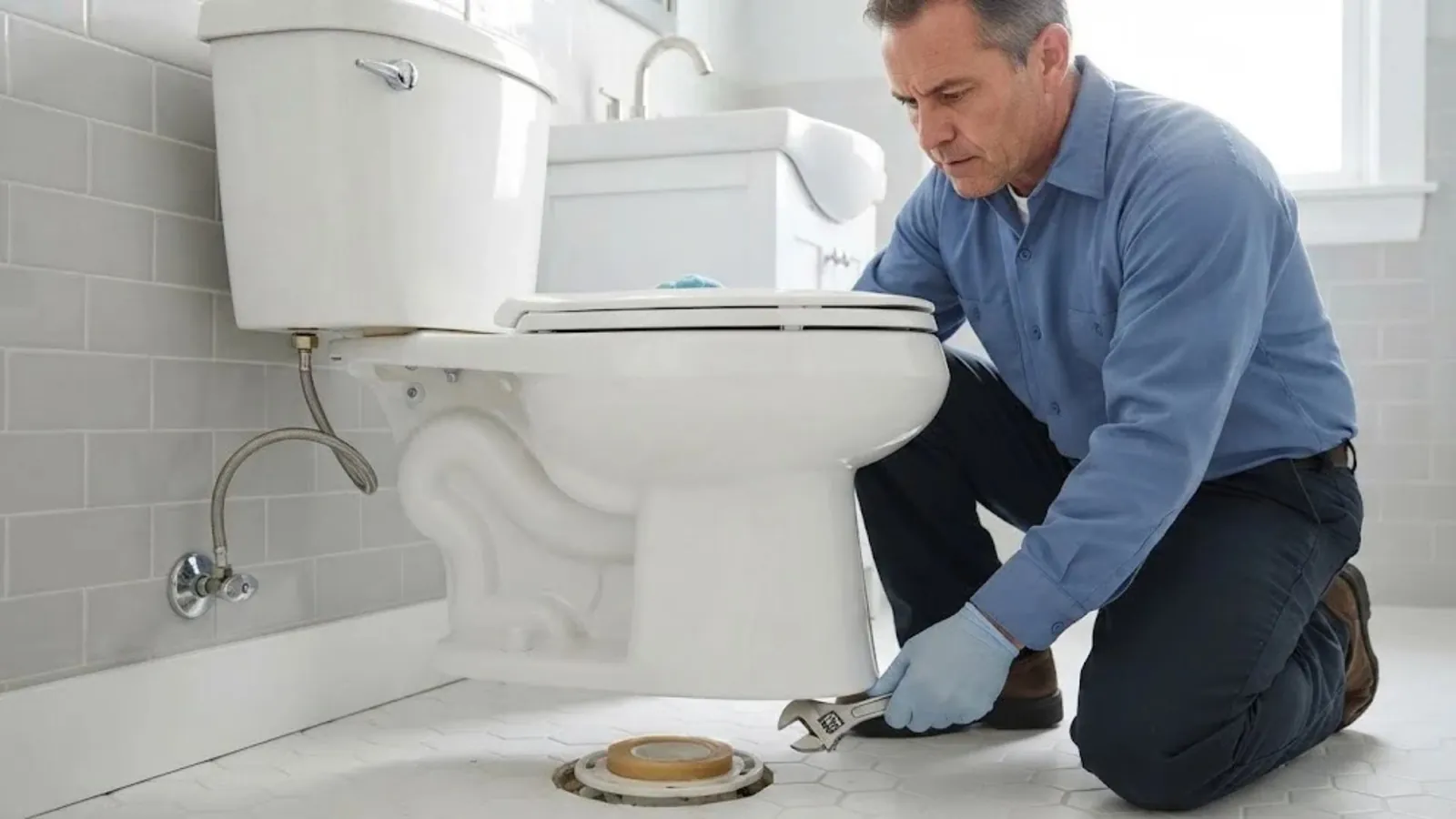
A solid object, a bowl that rocks, or a toilet that has to be lifted to retrieve something belongs to toilet repair service. The toilet has to be pulled and then reset with a fresh seal, which is more than most casual repairs call for.
If the bowl is about to overflow
Turn the wall valve clockwise to stop the refill, push the flapper down in the tank, and lay towels before more water arrives. Keep children and pets away, since overflow water can carry waste.
If sewage comes up in the tub or a floor drain, stop using every fixture and call. Photograph the damage before you clean up, since coverage varies by policy, so ask your insurer.
What drives the cost of a clogged toilet call
The first factor is where the clog sits. A blockage in the trap is quick, while one in the main line takes a longer cable, more access and sometimes a camera. The second is whether the toilet must be pulled, which adds a reset and a new seal.
Repeat clogs, tight bathrooms, and calls outside normal hours also change the scope, and so does anything the plumber finds in the bowl or trap that needs a different fix. Want a real number for your home? Then call (717) 349-9373 and describe what the toilet and the other drains are doing.
Silver Spring homeowners: public sewer or septic changes the answer
Where the waste goes changes what a stubborn clog means. West Hempfield Township's building permit form asks whether a property's sewer is public or private, and the township website asks septic owners to send pumping reports, so both setups exist here. Find out which one applies to your home before you assume the clog sits in the toilet.
On public sewer, a backup in several fixtures points at the main line. On septic, slow drains everywhere can mean a full tank or a field problem, and a snake will not fix that. Chemical openers can also upset a septic tank, so skip them.
Columbia's borough streets were laid out long before modern plumbing, and as general trade knowledge, homes built decades ago can have clay or cast iron lines that catch debris more easily. Our dispatch covers Columbia to the southwest and Lancaster to the east, where the first question is the same: public sewer or private line.
Local facts here come from the West Hempfield Township website and permit application and the Wikipedia entry for Columbia. Pipe-material statements are general trade knowledge.
Quick answers to common questions
It is a poor choice. A standard snake can scratch the porcelain and is hard to steer through the trap. A closet auger has a sleeve that protects the bowl and a curved tip made for the job.
Plunge first with a flange plunger. If the water level does not drop after several firm pumps, move to the auger. Do not combine either with a chemical opener.
The clog may be deeper than the auger reaches, or the line may be partly blocked. A foreign object or a venting problem can also be the cause. A repeat clog is a reason to have the line checked.
Other drains tell the story. Gurgling in nearby sinks, water rising in the tub when the toilet flushes, or several fixtures draining slowly all point past the toilet.
It depends on where the blockage sits and who owns that section of the line. Ask the Municipal Authority department listed on the township website, or your borough office, where its part of the line ends. Septic homes have no public line, so the hauler is the first call.
Sources behind this guide
- According to the Pennsylvania Office of Attorney General's Home Improvement Consumer Protection Act brochure, contractors doing $5,000 or more of home improvement work in a year must register, and a written contract is required when work costs more than $500. Check any contractor at attorneygeneral.gov.
- West Hempfield Township website (westhempfield.org), for the township's permit application, building code official and septic pumping notice.
Want a plumber to look at it?
Call the line, describe what you see, and ask for a same-day appointment when available.