
Sewer Camera Inspection Cost Factors and What You Get in Silver Spring, PA
A sewer camera inspection sends a small waterproof camera down your main drain line so a plumber can see cracks, roots, sags and blockages. In Silver Spring, PA, the price depends on access, line length and whether the pipe needs cleaning first. Dollar figures vary too much to quote here.
What a sewer camera inspection is and what you receive
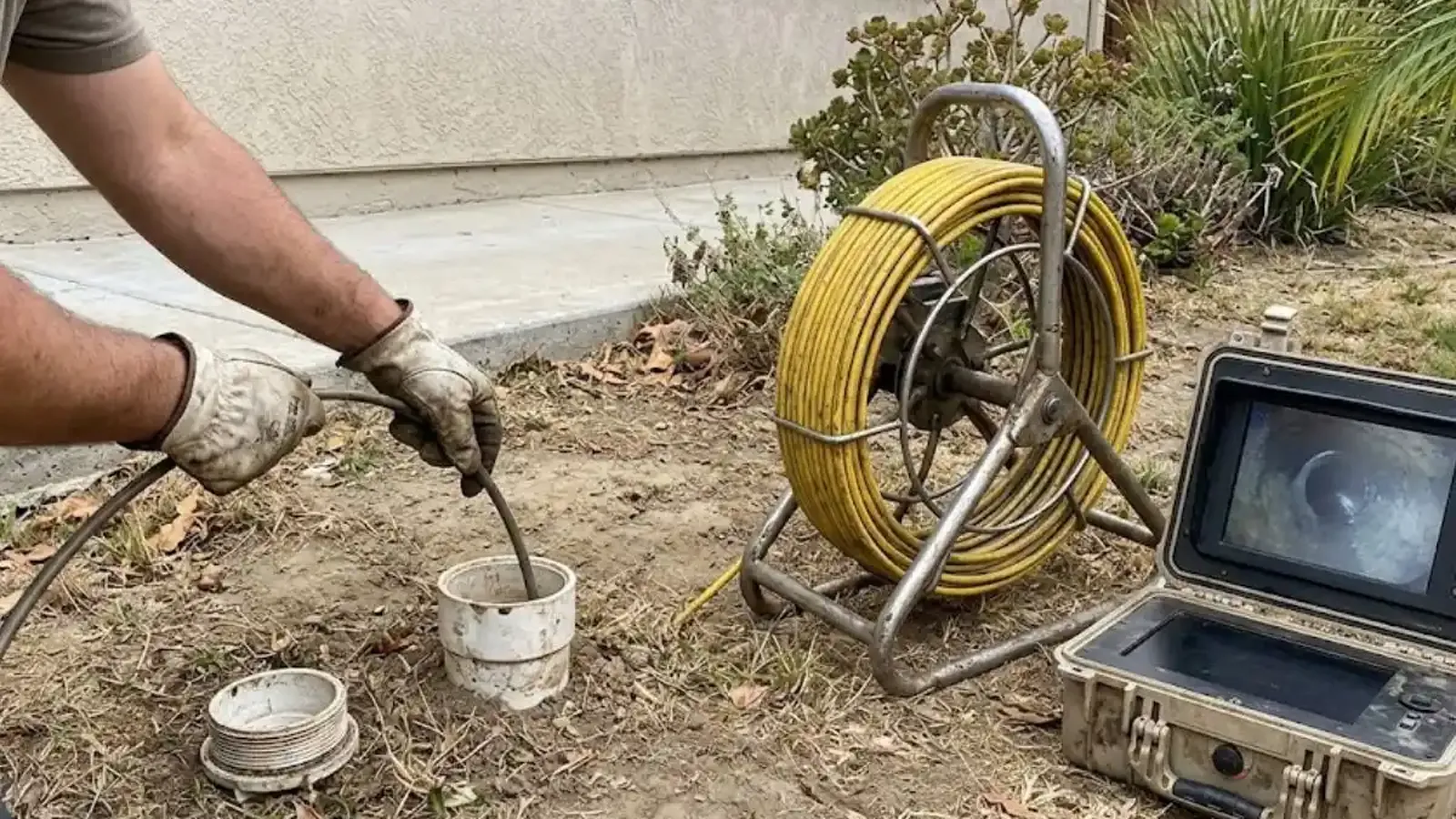
The plumber who comes out feeds a flexible cable with a camera head into the sewer line, usually through a cleanout. A monitor shows the pipe interior live. Common methods include a locator that picks up a signal from the camera head so the plumber can mark its position and depth above ground.
A good inspection ends with something you can keep: recorded video or photos, notes on what was seen and where, and a plain explanation of the next step. Ask any company, including us, whether it records the footage and hands it over before you book. A sewer inspection that leaves you with only a verbal summary is hard to compare with a second opinion.
What the camera can show you
The camera is a diagnostic tool, so what it finds sets what happens next.
- Tree roots entering at joints, which show as fine hair-like growth or thick masses.
- Cracked, collapsed or offset pipe where sections no longer line up.
- A belly or sag where water pools and solids collect, which looks like standing water on the screen.
- Scale and rough buildup on the inside of old cast iron.
- Grease and debris that a cleaning pass can remove.
- The point where the house line meets the lateral or the tank connection, if it can be reached.
What drives the cost of a camera inspection
Price tracks effort, not a flat rate. A clear cleanout close to the house is quick. A line with no cleanout may need the plumber to pull a toilet or work from a roof vent, which takes longer and adds a reset step.
Line length, bends and depth change how much cable and time the job needs. If the pipe is full of grease or roots, it may need cleaning before the camera can pass, and that cleaning is billed separately from the look. Add a locating mark, written report or video file, and the visit grows again.
Ask each company to tell you what is included before you agree. A clear price before work starts is the standard to expect, and a vague phone quote that excludes the recording is a warning sign.
Pricing factors at a glance
Use this table to compare quotes on the same terms.
| Factor | Why it changes the price | Question to ask |
|---|---|---|
| Cleanout access | A cleanout makes entry simple. No cleanout means more work | Where will you enter the line? |
| Pipe cleaning first | Roots or grease may block the camera | Is cleaning included or separate? |
| Length and bends | More cable, more time, harder navigation | How far down the line can you reach? |
| Locating and marking | Needed to plan a dig or spot repair | Will you mark the location and depth on the ground? |
| Recording and report | Useful for a second opinion or a purchase | Do I keep the video and notes? |
| Emergency timing | Night and weekend calls cost differently | What changes after hours? |
What you can do before the plumber arrives
Safe preparation takes about ten minutes and saves time on site.
- Find your cleanout
It is usually a capped pipe in the basement, crawl space or outside near the foundation. Do not open it if the house is backing up, since sewage can spill.
- Write down the symptoms
Note which drains are slow, how long it has been happening and whether the smell comes and goes.
- Skip chemical cleaners
Caustic products sit in the pipe and can splash on whoever opens it later.
- Clear a path
Move boxes and stored items away from the basement drain area and the cleanout.
- Photograph anything wet
Floor staining and damaged belongings help if you talk to your insurer.
What the findings usually lead to
The camera does not fix anything on its own.
| Finding | Typical next step | Does it need digging? |
|---|---|---|
| Light grease or debris | Cleaning, sometimes followed by a second look | No |
| Roots at a joint | Cut the roots, then decide on lining or replacing the section | Sometimes |
| Offset or cracked section | Local repair of the damaged length | Often |
| Belly holding water | Monitor, clean regularly or re-grade the section | Often |
| Collapse | Replacement of the failed section | Yes |
If the picture shows damage, the next question is how to fix it, which is the job of sewer line repair and depends on depth, material and what sits above the pipe.
Clear the line first or look first?
If the line is draining slowly but not blocked, a camera pass first often shows the cause and avoids guesswork. If a drain is fully backed up, the plumber usually has to open the line before any camera can pass. Expect the visit to be split into a clearing step and an inspection step.
After a line is cleared, a second pass shows whether the pipe is sound or merely open for now. That second look is the part people skip, and it is the part that tells you if the clog will come back.
A camera inspection before buying a house
Older homes can hide sewer problems that do not show on a standard home inspection. A recorded camera pass gives you evidence to bring to negotiations. It does not predict what the pipe will do next year, so treat the video as a snapshot.
Nearby towns, different sewer questions
Homes in Landisville sit in East Hempfield Township, so permit and sewer questions go to that township, not West Hempfield. Marietta is a river borough with an older housing mix, and a crew serving Marietta may find older drain materials alongside renovated lines. A river-town house might have clay, cast iron or newer plastic in the same run.
Digging anywhere in Pennsylvania means calling PA One Call at 811 at least three business days ahead. The locate is free to homeowners, and it protects you from striking a buried line.
Silver Spring homeowners: public sewer, private sewer or septic
West Hempfield Township's building code permit application asks the applicant to mark sewer as public or private and to attach a sewer or septic permit if applicable. That tells you the township treats the question as basic, and so should you. Before you buy a camera visit, learn which system your house uses.
The township website also asks septic owners to have their pumping hauler send the pumping report to the township, so many homes here use septic. For a septic house, the camera usually inspects the line between the house and the tank. The tank itself is a pumping and inspection question. If your property is in Landisville or Marietta, ask the borough or East Hempfield Township office who owns which portion of the lateral.
Local facts here come from the West Hempfield Township building code permit application and its septic notice, plus the PA One Call guidance published by the Pennsylvania Public Utility Commission.
Quick answers to common questions
No. The cable is flexible and sized for the line. A plumber should stop and reassess if the camera snags hard, because forcing it could dislodge a weak section.
It depends on access, line length and whether cleaning is needed first. A clear, short line goes quickly. A blocked or long line takes longer. Ask the company for an honest window instead of a promise.
Yes, most plumbers want an adult present to show the cleanout, approve any extra work and see the monitor. Having the video explained live is more useful than reading notes later.
Rental and consumer cameras exist, but without a locator and training you cannot tell a crack from a joint or know how deep the line is. Cheap equipment can also snag in a damaged pipe. For a one-time answer, a plumber's inspection usually reveals more.
It varies by municipality and by whether your property is on public sewer. Ask the township or borough office, and check your property paperwork. Do not assume the municipality repairs the lateral.
Yes. A repair quote without a recording is a guess about the section that is failing. The video lets you compare quotes and keeps the work focused on the damaged length.
Sources behind this guide
- According to the Pennsylvania Office of Attorney General's Home Improvement Consumer Protection Act brochure, contractors doing $5,000 or more of home improvement work in a year must register, and a written contract is required when work costs more than $500. Check any contractor at attorneygeneral.gov.
- According to the Pennsylvania Public Utility Commission, state law requires contacting PA One Call (dial 811) at least three business days before excavation, and homeowners pay nothing for the locate.
- West Hempfield Township website (westhempfield.org), for the township's permit application, building code official and septic pumping notice.
Want a plumber to look at it?
Call the line, describe what you see, and ask for a same-day appointment when available.