Frozen Pipes: What to Do First and How to Prevent Them in Silver Spring, PA
If a pipe in your Silver Spring, PA home is frozen, open the faucet it feeds, find your main water shutoff, and warm the pipe slowly with a hair dryer on low. Never use a flame. If the pipe is cracked or water is spraying, shut the main off and call.
What to do first when a pipe freezes
Start with these steps in order. They work for a pipe that is frozen but not yet leaking.
- Find the main shutoff
Know where it is before you touch anything else. If a pipe splits when it thaws, you want to close the valve fast.
- Open the faucet the frozen line feeds
An open tap lets melting water and pressure escape as the ice clears.
- Locate the frozen section
Look along exterior walls, in the garage, crawl space, under cabinets and near the basement ceiling. Frost on a pipe or a bulge is a clue.
- Warm it slowly
Use a hair dryer on a low setting, a heating pad or warm towels. Start at the faucet end and work toward the frozen section.
- Check for leaks as the water returns
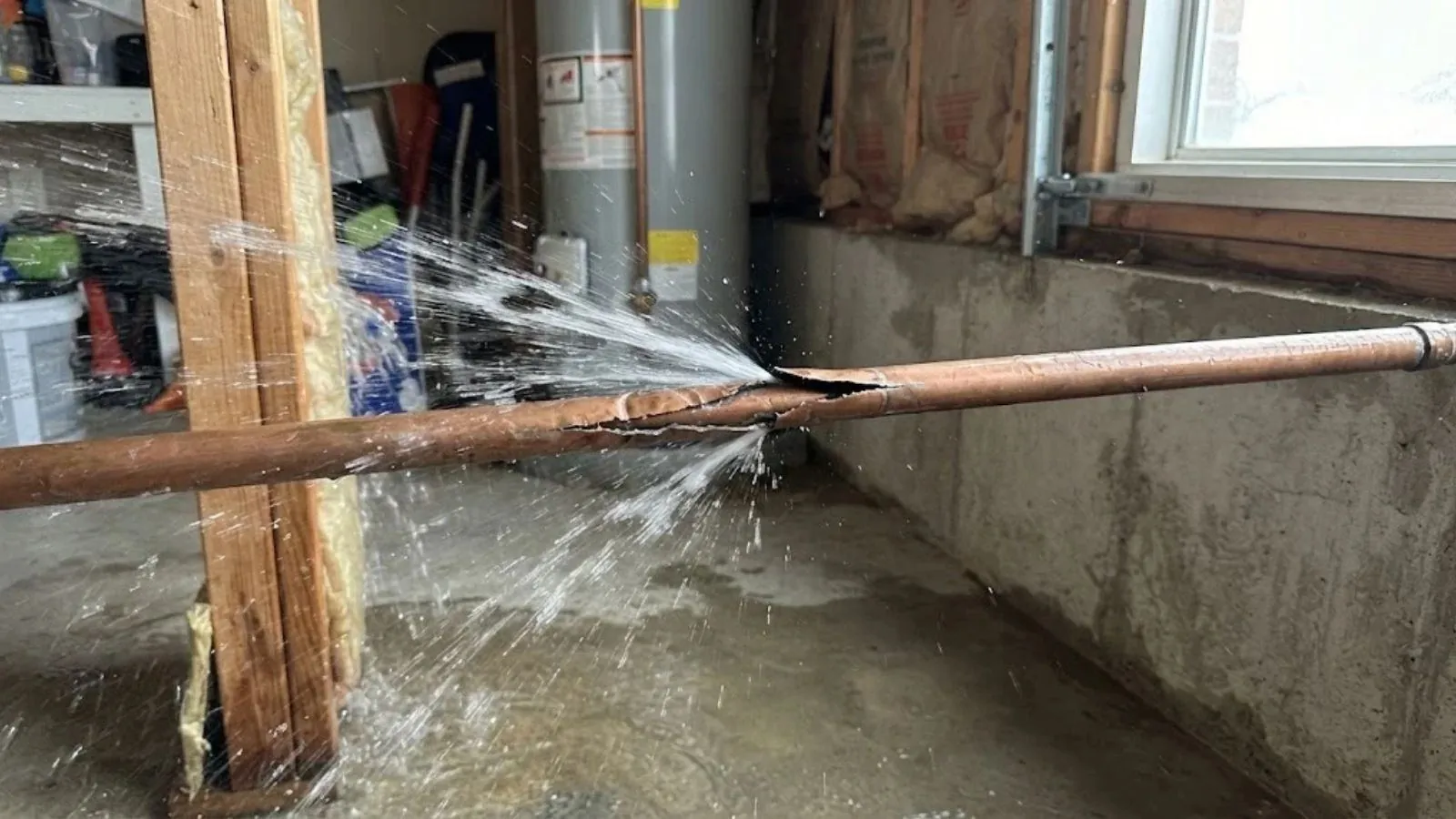
Look along the whole length of the pipe. Any drip, spray or damp spot means shut the main off and call.
If a pipe has already burst or water is spraying
A split pipe floods quickly once the ice melts, and thawing can make it worse. Close the main shutoff right away, then call our 24/7 line. If water is near outlets or the panel, stay away and switch off power only if you can reach the panel while dry.
- Close the main shutoff.
- Open a low faucet to drain the lines.
- Move belongings away from the water.
- Photograph damage for your insurer.
- Do not use an open flame to dry or thaw anything.
What not to do
Do not use a torch, a propane heater or a kerosene heater to thaw a pipe. An open flame can ignite framing and insulation, and fumes are dangerous in a closed space. Do not use a space heater near water or damp floors.
Do not keep thawing a pipe you can see is cracked. Do not ignore a frozen pipe in the hope it clears on its own, because pressure can build behind the ice. If you cannot find the frozen section, or it sits behind a finished wall, stop and call.
Where pipes freeze and how to protect them
The weakest points are the places where cold air reaches the pipe.
| Location | Why it freezes | Protection |
|---|---|---|
| Garage or unheated crawl space | Cold air reaches the pipe from every side | Foam sleeves, sealed gaps and heat tape designed for pipes |
| Pipes in an exterior wall | Little insulation between pipe and outside | Open the cabinet doors and keep the heat on |
| Outdoor hose bib | Connected hose holds water in the spigot | Disconnect hoses and close the interior shutoff if there is one |
| Basement near a window or rim joist | Drafts chill the pipe | Seal the gap and insulate the pipe |
| Water line entering the house | Cold concentrates where the line meets the wall | Insulate the entry area and keep it warm |
Prevention before the first cold snap
Most frozen pipe repairs start with a pipe that was never protected.
- Disconnect garden hoses and shut off exterior spigots from the inside if you have a valve.
- Insulate exposed pipes in the garage, crawl space and exterior walls.
- Open cabinet doors under sinks on exterior walls during a hard freeze.
- Let a faucet drip slightly on the coldest nights if a line has frozen before.
- Keep the thermostat at a steady setting even if you travel.
- Label your main shutoff so anyone in the house can find it quickly.
Leaving the house in winter
Pipes freeze most often when a house sits cold. If you are away for several days, keep the heat on at a steady, moderate setting and ask a neighbor to look in. Some owners shut the main off and drain the lines, but that choice depends on your heating system, so ask a plumber first.
A burst pipe in an empty house can run for days before anyone notices. A leak alarm or an automatic shutoff valve is a reasonable add-on, and the main valve should be easy to reach and turn.
A frozen pipe may be a symptom, not the whole problem
A pipe that freezes once will freeze again if the cause is a draft, a missing insulation sleeve or a heating failure. Look for the cold source while you thaw. A pipe can also freeze and crack without leaking until it warms, so check the area an hour or two after water returns.
When the heat goes out too
A boiler shutting down in a cold snap can let pipes freeze quickly, and it can also be the result of a freeze. On some high-efficiency boilers, a frozen condensate drain can cause the unit to lock out. If your boiler stops, check for an error code and note it, but do not relight a pilot yourself.
Boiler repair is a job for a licensed plumber. If you smell gas, leave the building and call your gas utility or 911 from outside.
After the thaw: what the plumber looks for
After a freeze, a plumber who responds to a burst pipe repair will usually check the entire run, not just the split. Frozen pipes weaken beyond the visible crack, and a patch on one section may leave a second weak spot a few feet away.
Typical steps include shutting the water off, draining the line, cutting out the damaged section, installing new pipe and pressure testing before turning water back on. Coverage for damage varies by policy, so ask your insurer, and photograph everything first.
Older homes in the boroughs
As general trade knowledge, older homes in river boroughs like Marietta and in city neighborhoods near Lancaster often have pipes on exterior walls or in unheated basements. These layouts are more prone to freezing than newer interior routing. A walk through your own basement with a flashlight before winter tells you where your weak spots are.
Silver Spring homeowners: winters with real snow and plenty of moisture
Nearby Landisville averages about 23 inches of snowfall and about 45 inches of precipitation a year. That means winters here bring real snow and cold snaps, so the first hard freeze is the time to walk through your garage, crawl space and exterior walls. It is not a statement about local frost depth, which this site does not claim.
If your water line was ever repaired or run through a cold space, ask your water utility or a plumber where the curb stop and your main shutoff are, and test your main valve before winter. A valve you cannot turn on a calm day will not turn on a bad one.
Local facts here come from Wikipedia climate normals for Landisville (1991 to 2020), used as the nearest verified reading.
Quick answers to common questions
It depends on how long and how solid the ice is. Slow, steady warmth works better than heat, and you should keep the faucet open the whole time. If nothing flows after patient effort, call.
No. Ice can block water without splitting the pipe. But the pipe may crack where the ice sat, and the split often shows only when it thaws. Watch the area after water returns.
A steady heat setting helps, and so does opening cabinet doors on exterior walls. It does not fix a pipe in a garage or crawl space that gets no heat, so insulate those.
A heat gun can overheat a pipe or scorch framing, so we do not recommend it. A hair dryer on low and warm towels are safer choices.
Disconnect the hose, open the spigot, and check the wall behind it from inside for drips once it thaws. Water inside a wall is a reason to shut the main off and call.
Moving water is harder to freeze, and open flow relieves pressure between ice and the faucet. It helps on the coldest nights for lines that have frozen before. It is a backup, not a substitute for insulation.
Sources behind this guide
- According to the Pennsylvania Office of Attorney General's Home Improvement Consumer Protection Act brochure, contractors doing $5,000 or more of home improvement work in a year must register, and a written contract is required when work costs more than $500. Check any contractor at attorneygeneral.gov.
- Wikipedia climate normals for Landisville (1991 to 2020), for the precipitation and snowfall averages.
Want a plumber to look at it?
Call the line, describe what you see, and ask for a same-day appointment when available.