
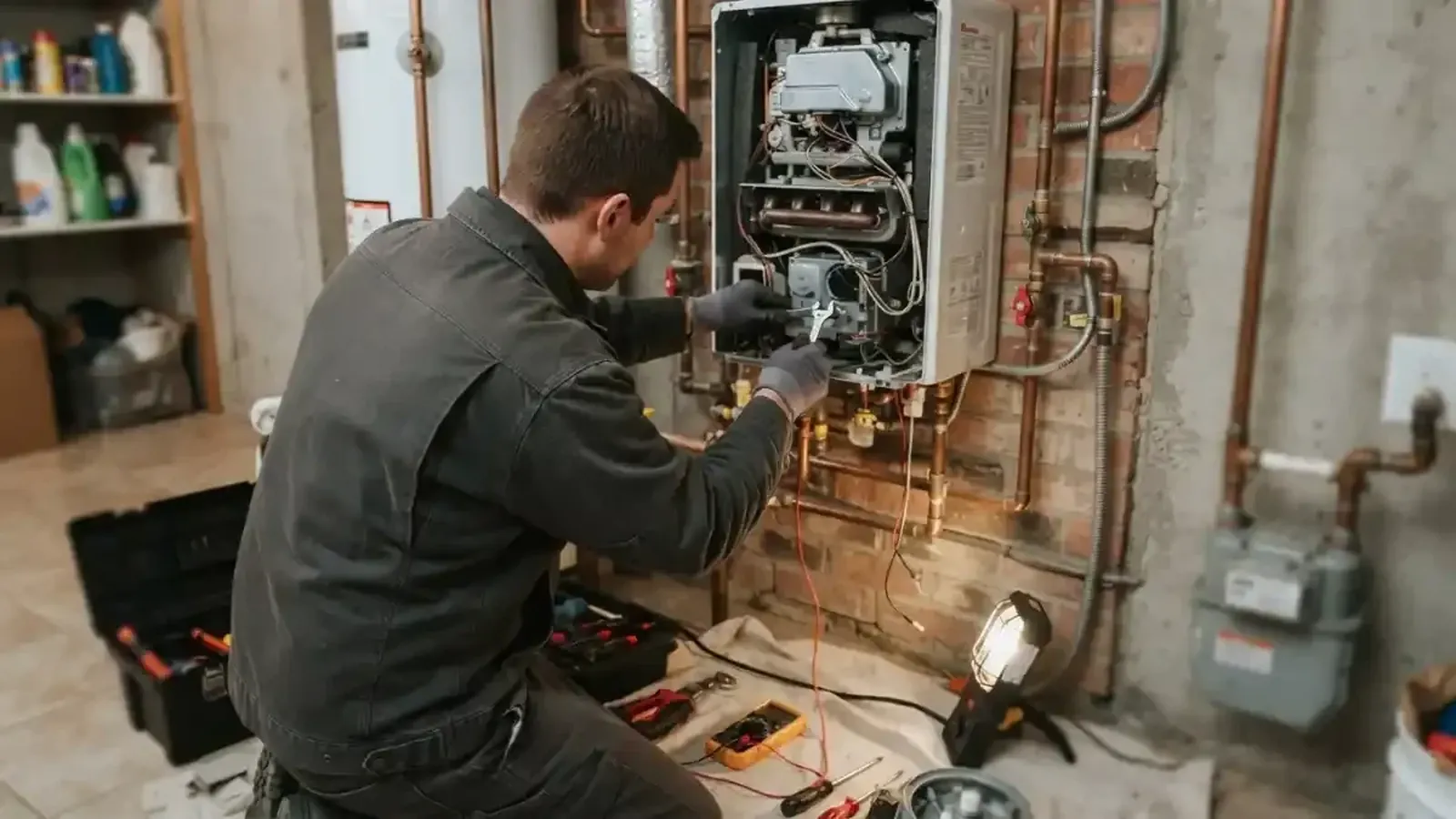
Boiler Repair in Silver Spring, PA
Boiler repair is the diagnosis and fix of a hot water or steam boiler that is not heating the house, holding pressure or staying dry.
Licensed plumbers serve Silver Spring, PA, and nearby towns for no-heat calls, pressure faults, leaks and noisy pipes.
No heat: what to check before blaming the boiler
Start with the simple items. Confirm the thermostat is set to heat and above the room temperature, then check the boiler switch, the breaker and the fuel supply. A tripped breaker, an empty oil tank or a closed gas valve explains many cold mornings.
Look at the pressure gauge next. A reading near zero means the system has lost water, and a very high reading means pressure is building where it should not. Write down what you see, because the number tells the plumber where to begin.
Gas smell near the boiler: get outside first
A rotten-egg odor around the boiler or its pipes means you should walk out of the building straight away. Bring the household, leave the door open behind you, and skip the thermostat, the lights and any phone call until you are outdoors.
From outside, call your gas utility or 911 and wait for them to clear the house. Book the boiler visit only after the gas is made safe. If a carbon monoxide alarm sounds, leave and call 911 as well.
Boiler symptoms, causes and sensible next steps
| Symptom | Likely cause | Sensible next step |
|---|---|---|
| No heat, boiler silent | No power, tripped limit switch or no fuel | Check the breaker and fuel supply, then call |
| Boiler runs, radiators cold | Air in the loop, failed circulator or a stuck zone valve | Note which zones are cold and call |
| Pressure keeps dropping | A slow leak, a faulty auto-fill valve or a bad expansion tank | Do not keep adding water, and call |
| Pressure climbs high | Waterlogged expansion tank or a failing fill valve | Turn the boiler off and call |
| Water on the floor | Weeping relief valve, pump flange or fitting | Trace the drip and shut the boiler off |
| Banging or gurgling | Air in lines, a failing pump or scale and trapped steam | Listen for where it starts and call |
Hot water boilers versus steam boilers
A hot water boiler, also called hydronic, circulates heated water through baseboard or radiator loops with a pump. It stays full of water and relies on an expansion tank and a pressure gauge. A steam boiler heats water into steam that rises to radiators and falls back as condensate.
Steam systems depend on a correct water level, working traps and air vents, and a low water cutoff that protects the boiler. Never top off a steam boiler blindly, because the wrong water level can damage it. Tell the plumber which type you have and whether it burns gas or oil.
Boiler pressure: too high, too low or dropping
The pressure gauge is the quickest health check. Each maker lists a target range on the label or in the manual, so read that instead of trusting a number from the internet. A hot system reads higher than a cold one, but it should settle to a steady figure.
Low pressure usually means water is escaping or the auto-fill valve is not working. High pressure often points to a waterlogged expansion tank, and a relief valve that spits water is the boiler's way of warning you. Do not plug that valve, and do not keep refilling a system that keeps losing water.
Leaks at the boiler and in the heating loop
Common drip points include the relief valve, the circulator pump flange, radiator valves, threaded pipe joints and the bottom of the boiler. A drip from a valve or flange is a repair. Water that seeps from the boiler's casing or heat exchanger usually means the unit is nearing replacement.
If a leak is hidden inside a wall or floor, a burst pipe repair visit can open and fix the damaged section. Dry the area, mark the wet edge with tape and take photos so the plumber can see how fast it spreads.
What the noises mean
Boilers talk before they fail. These sounds are worth reporting.
- Banging or knocking from the boiler, often caused by scale, trapped steam or a failing pump.
- Gurgling in baseboards or radiators, which usually means air in the loop.
- Whistling or kettle-like sounds, a hint of scale or restricted flow in the heat exchanger.
- Clicking or ticking pipes as they expand, which is normal unless it is new and loud.
- Hammering when a zone valve closes, a sign of water hammer in the pipes.
- Rumbling at the burner, which can mean poor combustion and needs a technician.
Frozen pipes in cold weather: how to thaw safely
Our line runs 24/7, and winter no-heat calls often come with frozen pipes. Nearby Landisville averages about 23 inches of snow a year, so any pipe in an unheated garage, crawlspace or exterior wall can freeze.
- Open the nearest faucet
A tap opened a little lets steam and meltwater escape as the ice clears.
- Look for a crack
Check for bulges, frost lines or wet spots. If you see water, close the main valve and call.
- Warm the pipe gently
Use a hair dryer, a heating pad or warm towels, working from the faucet side inward. Never use a torch or open flame.
- Protect the coldest rooms
If the boiler is down, open cabinet doors under sinks on exterior walls and keep interior doors open so warmer air circulates.
- Call if you cannot reach it
Pipes behind a wall or under a slab are a plumber's job. See our burst pipe service if one has split.
Safe checks versus work for a licensed plumber
You can safely check the thermostat, the breaker, a fuel gauge and the pressure reading, and you can bleed a radiator if you know how. Gas valves, burners, relief valves, combustion and venting are for a licensed plumber or heating technician.
Ask any company whether the technician who comes out works on your fuel and boiler type before booking, and ask us too. Fit a carbon monoxide alarm near sleeping areas and test it.
Older homes and radiators around Lancaster
Homes built decades ago can still run on radiators, cast iron piping and older boilers, and the area around Lancaster has a mix of old and renovated houses. That matters because aged parts tend to fail together, and a repair may lead to a conversation about replacing the boiler.
Lancaster is about 5 to 7 miles from Silver Spring, depending on ZIP. Give us your address and the type of heating, so the right plumber is dispatched.
What affects boiler repair pricing
Boiler bills vary with the fault and the system. A bad circulator is a different job from a leaking heat exchanger. Clear price before work starts lets you compare a repair with a replacement.
Steam, hot water, gas and oil boilers have different parts and test methods.
A pump or valve is a smaller job than a heat exchanger or a control board.
Tight utility rooms and old piping take longer to work around.
On an old boiler, the plumber weighs the repair against replacement.
Corroded valves, bad air vents or poor combustion may add work, and you hear about it first.
Coverage varies by policy, so ask your insurer, and photograph the gauge, the label and any water damage. Related work on hot water supply is on our water heater repair page.
Want a real number for your boiler? Then call (717) 349-9373 and describe the symptoms.
Boiler Repair questions answered
Possible causes include no power, a tripped safety switch, an empty fuel supply, low water or a failed pump or zone valve. Check the thermostat, breaker, fuel and pressure gauge, then call with what you found.
On a hot water boiler, some makers allow topping off to the label's pressure, but a system that keeps losing water has a leak. On a steam boiler, level matters, so wait for a plumber if you are unsure.
It opens when pressure or temperature goes too high, or when it has worn out. Causes include a bad expansion tank or an overfeeding fill valve. Do not cap the valve.
The tools and safety rules overlap, but the parts differ. Steam depends on water level, traps and vents, while hot water depends on pressure, pumps and the expansion tank.
Open a faucet, check for cracks and warm the pipe gently without flame. If water is escaping, close the main valve and call. Keep heat in the coldest rooms until a plumber arrives.
Follow the maker's manual. Regular checks catch weak parts before the first cold snap, and a service visit looks at pressure, safety controls, combustion and leaks.
Where the rules in this boiler repair guide come from
- According to the Pennsylvania Office of Attorney General's Home Improvement Consumer Protection Act brochure, contractors doing $5,000 or more of home improvement work in a year must register, and a written contract is required when work costs more than $500. Check any contractor at attorneygeneral.gov.
Book boiler repair with one call
Tell the dispatcher about your home and ask for a same-day appointment when available.