
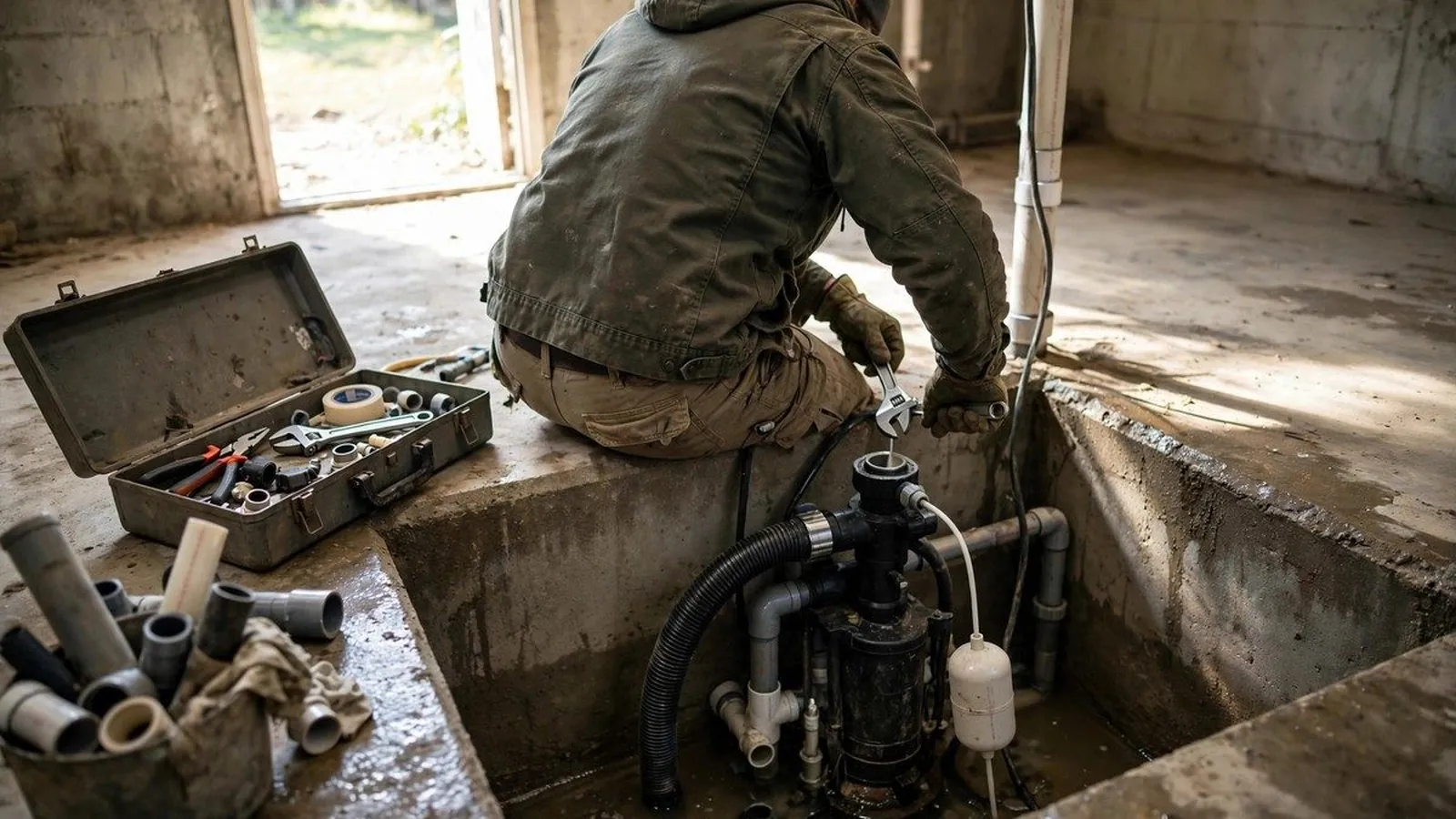
Sump Pump Installation Cost in Silver Spring, PA
A sump pump is a pump set in a pit in the basement floor that sends collected water outside. Sump pump installation cost in Silver Spring, PA depends on whether a pit already exists, the pump you choose, where the discharge line ends and whether you add a backup. A real number needs a look at the basement.
Why no one can quote a number sight unseen
The same pump can be a one-hour swap in one house and a day of concrete work in another. If a pit already exists and the pump is the only failed part, the job is small. If the floor must be cut, a pit dug, a discharge line run outside and a backup added, the job is much larger.
A sump pump installation or repair visit starts with questions about where the water comes from, how often it comes and where it can safely go. Some basements also need basement waterproofing such as gutter fixes or an interior drain, because a pump alone cannot move water that never reaches the pit. A company that names a price before asking those questions has not priced your basement. The factors below are the ones to expect on any honest quote.
What changes the cost of a sump pump installation
New pit or existing pit
A new pit means breaking out part of the concrete floor, digging, setting a liner and patching the slab. An existing pit skips most of that work, but it may need cleaning or a new liner.
Pump type and capacity
A pedestal pump stands on a column above the pit. A submersible pump sits down in the water and is usually quieter. The right capacity depends on how much water arrives, which is why guessing from the size of the house is risky.
Discharge line
The pipe must carry water outside and away from the foundation. Longer runs, a wall penetration, a trench and a spot that does not freeze or flood back all change labor and material.
Check valve and backflow control
A check valve keeps pumped water from running back into the pit and starting the cycle again. A cheap or missing valve causes short cycling and extra wear.
Power and backup
The pump needs a dedicated outlet that is protected and within reach. A battery or water-powered backup adds equipment, and any new electrical circuit may need a licensed electrician.
Access and cleanup
A finished basement, tight stairs or stored belongings take time to work around. Removal of debris and concrete is part of what a quote should list.
Which job do you have? Three common situations
Your answer decides the scope of the quote, so describe your situation first when you call.
| Situation | What the job usually involves | What to ask the contractor |
|---|---|---|
| Pit exists and the pump failed or sticks | Swap the pump, test the float, check the valve and discharge | Is the old valve reused or replaced, and is the discharge line checked? |
| No pit and water on the floor | Locate the low point, cut the floor, set the pit and pump, run the discharge | Where does the water go, and who patches the floor? |
| Pump works but power fails in storms | Add a battery or water-powered backup and an alarm | How long does the backup run, and what does it need to stay charged? |
| Sewage pump in a basement bath or laundry | A different pump for waste, with a sealed lid and vent | Is the new pump rated for solids, and is the vent included? |
A sewage ejector is not the same as a sump pump. If the pit receives toilet or laundry waste, say so on the first call.
What a typical installation looks like
Methods vary, but a standard visit follows an order like this.
- Look at the water path
The plumber who comes out checks where the water enters, where it pools and which spot is lowest.
- Prepare or open the pit
For a new pit, the floor is cut, soil is removed and a liner is set. For an existing pit, debris and old fittings are cleared.
- Set the pump and valve
The pump goes in with a check valve on the discharge pipe, and the float is placed so it moves freely.
- Run the discharge
The line goes outside and ends well away from the house. Any outside trenching requires an 811 locate first.
- Test and tidy
Water is poured into the pit to confirm the pump starts, empties it and shuts off. The floor is patched and debris removed.
Check the pump you have before you shop
A failing pump is often easier to spot than owners expect. Do this test before a storm season, not during one.
- Pour a bucket of water into the pit and watch the float rise and the pump start.
- Listen for grinding, rattling or a motor that hums without moving water.
- Look outside to confirm the discharge is open, draining away and not frozen or buried.
- Press the reset on the outlet if it is a ground-fault type, and confirm the cord is dry and undamaged.
- Call a plumber if the pump runs constantly, starts and stops every few seconds, or the pit smells like sewage.
- Never reach into the pit while the pump is plugged in.
Comparing written quotes line by line
Ask each contractor to price the same scope so differences show where the work differs.
- Pump make, model and capacity written out, not just a generic description.
- Whether the pit, liner and lid are new or reused.
- The check valve, the discharge route and where it ends.
- Backup equipment and the stated runtime of the battery.
- Electrical work, and who does it.
- Floor patching, debris removal and any permit or inspection costs.
- Warranty terms for parts and labor in writing, including what voids them.
Worth knowing: a sump pump is only as good as the power behind it
Storms that raise water in the ground often knock out power too. A pump without a backup stops when the outlet goes dead, which is when the pit fills fastest. Ask any quote to say how the pump runs during an outage and how you will know it has stopped.
A battery backup has limited runtime, and a pump that cycles often uses it up faster. Ask for the figure in writing instead of trusting a general promise.
Silver Spring homeowners: storm outages, the river and contractor registration
The Susquehanna River at Marietta has a flood stage of 49 feet, and it crested at 58.16 feet in September 2011 in the remnants of Tropical Storm Lee and 64.54 feet in June 1972. Its last listed flood was in July 2018. Those are river events, so a sump pump does not stop them. Storms that raise the river also tend to strain power, which is why backup matters.
Nearby Landisville averages about 45 inches of precipitation a year, so a pump in a working pit will run often. Ask each contractor how the pump is built for frequent use. Homeowners in Marietta and Columbia near the river should also ask the township or borough office what rules cover where the discharge may go.
Pennsylvania requires contractors doing $5,000 or more of home improvement in a year to register with the Attorney General and show the number on contracts and estimates. Work that costs more than $500 needs a written contract, and a contractor may not demand payment before you sign. Check any registration at attorneygeneral.gov or call 1-888-520-6680.
Local facts here come from the NWS Susquehanna River at Marietta gauge page, Landisville climate normals and the Pennsylvania Attorney General home improvement brochure.
Quick answers to common questions
Swapping a pump in an existing pit is a manageable task for a handy owner if the power is off and the discharge line is accessible. Cutting a floor, running a trench, or adding wiring is a bigger job. Electricity and water in the same space call for caution.
No single figure applies. Life depends on how often the pump runs, the water quality, the pump type and how well it is maintained. A pump that cycles constantly wears out faster than one that runs rarely.
If your basement has taken water before, a backup is worth pricing. It protects against a power cut, though not against a pump that is undersized or a discharge that is blocked. Ask what the backup covers and what it does not.
It should end outside, away from the foundation, and drain where it will not flow back toward the house. Do not connect it to a sanitary sewer or septic system, because many places forbid that. Ask the township or borough office about local rules.
A backup answers power loss in storms, which is a real risk wherever heavy rain falls. It does not protect against river flood water. Ask the township office whether your property sits in a mapped flood area, and decide on the backup from the power question alone.
Sources behind this guide
- According to the Pennsylvania Office of Attorney General's Home Improvement Consumer Protection Act brochure, contractors doing $5,000 or more of home improvement work in a year must register, and a written contract is required when work costs more than $500. Check any contractor at attorneygeneral.gov.
- According to the Pennsylvania Public Utility Commission, state law requires contacting PA One Call (dial 811) at least three business days before excavation, and homeowners pay nothing for the locate.
- National Weather Service Mid-Atlantic River Forecast Center, Susquehanna River at Marietta gauge page, for flood stage and recorded crests.
- Wikipedia climate normals for Landisville (1991 to 2020), for the precipitation and snowfall averages.
Want a plumber to look at it?
Call the line, describe what you see, and ask for a same-day appointment when available.