
Basement Waterproofing Cost in Silver Spring, PA
Basement waterproofing in Silver Spring, PA means any work that keeps groundwater and roof runoff out of a basement or moves it away safely. The price depends on where the water enters, how much floor or wall must be opened, and whether water has to be pumped. A fair number needs a visit, so this guide covers the factors and how to compare quotes.
Why a real number needs a look at your basement
No honest dollar figure exists for a basement nobody has seen. Two houses on the same road can need very different work, because one may only need longer downspouts while the other needs an interior drain, a pit and a pump. A price quoted over the phone with no visit is a guess, and you should treat it like one.
Plumbers who do basement waterproofing usually find the entry point first and price the fix to match. Water through a wall crack, along the floor edge, and up through the slab each call for a different repair. Once you know the factors below, you can read a written quote line by line instead of comparing one lump sum to another.
Six factors that move the price
Where the water enters
A single crack is a small repair. Water at the floor edge on several walls means a longer drain run and more material. Water rising through the middle of the slab is a different problem again.
How much must be opened
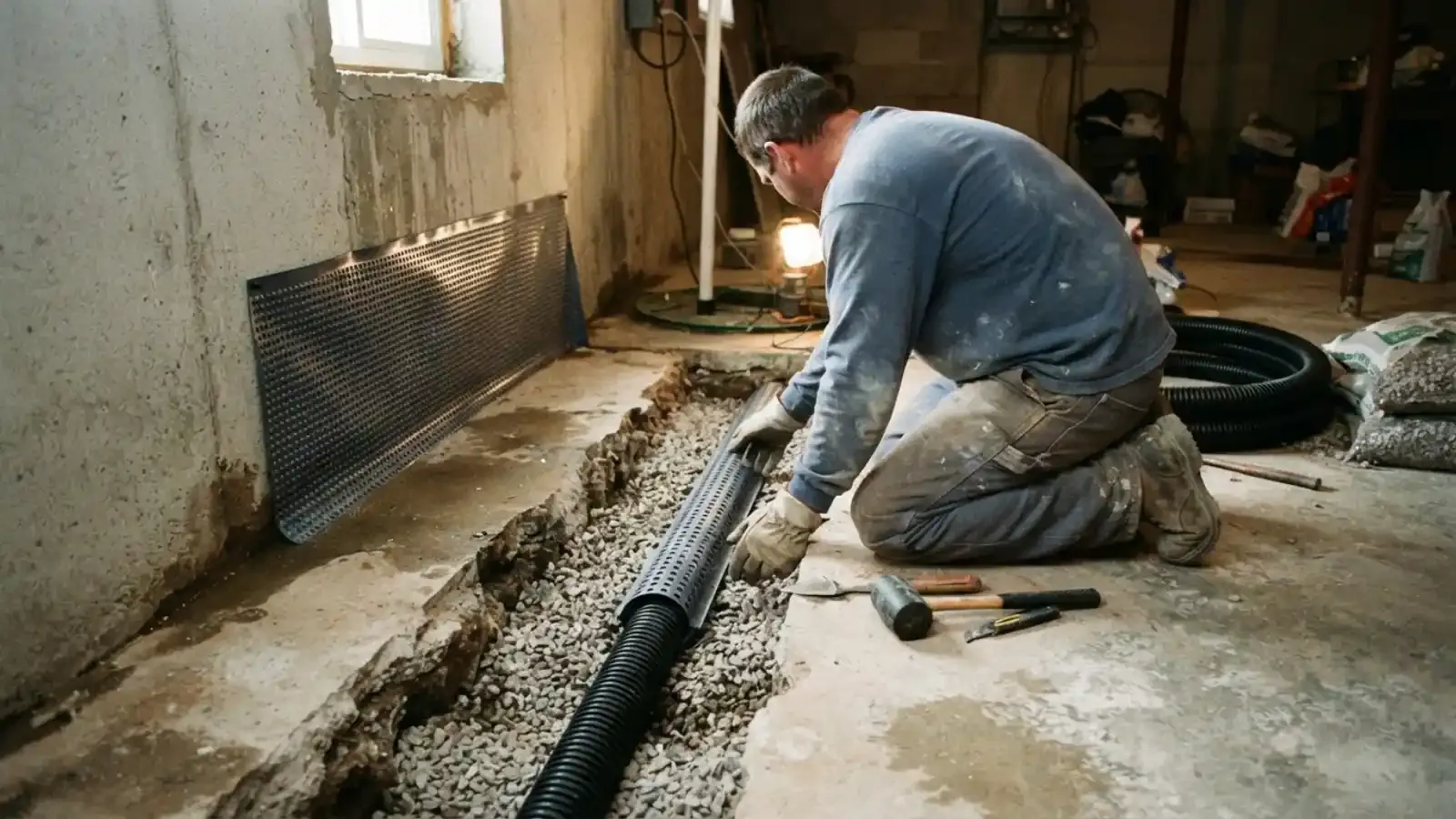
An interior drain system usually means cutting a channel in the floor along the wall and patching concrete afterward. Longer runs, thicker concrete and a finished basement all add labor.
Inside work or outside work
Outside work means digging down to the foundation, so access, decks, plantings and wall depth matter. Inside work avoids the dig but deals with water after it reaches the wall.
Pit, pump and backup
A drain system needs somewhere to send water. A pit and pump add equipment, electrical needs and a discharge line, and a battery backup adds more. The sump pump installation and repair page explains that part in detail.
Water from above
Clogged gutters, short downspouts and soil that slopes toward the house push roof water against the wall. Fixing those is often the cheapest step and sometimes most of the cure.
Finishes and cleanup
Drywall, carpet, stored items and a finished floor all raise the cost of access and repair. Removing wet materials or treating mold is usually a separate line item.
Waterproofing approaches side by side
Most basements need one or two of these, not all of them. Use the third column as a list of questions for each contractor.
| Approach | What it handles | Limits to ask about |
|---|---|---|
| Gutters, downspouts and grading | Roof water and surface runoff pooling at the wall | Does nothing for water rising from below or entering at the floor edge |
| Crack and joint sealing | One stable crack or a failed seam | A crack in a wall that is still moving can reopen, so ask what the repair allows for |
| Interior drain and sump | Water reaching the floor and wall base from many spots | Manages water after it enters, and the pump needs power, so ask about backup |
| Exterior excavation and membrane | Stops water at the outside face of the wall | Needs digging and an 811 locate, and disturbs the yard, steps and plantings |
| Sump pump alone | A pit that collects water already in the soil | Needs a path for water to reach the pit and a discharge that does not return to the house |
Many basements need a combination. A sound contractor tells you which part answers which symptom and which parts are optional.
Find where the water comes from before you collect quotes
River boroughs such as Columbia have a mix of old and renovated homes, and an older foundation can show water at joints more than at single cracks. Whatever you own, a few hours of looking will make every quote more accurate.
- Watch during heavy rain
Walk the basement with a flashlight during or just after a hard rain. Note whether water appears at a wall crack, at the floor edge, near a pipe or in the middle of the floor.
- Check the outside
Look for gutters packed with debris, downspouts that end at the foundation and soil that slopes toward the house. These are the cheapest causes to fix.
- Try the foil test
Tape a square of aluminum foil tightly to a damp wall and leave it a day or two. Moisture under the foil suggests water coming through the wall. Moisture on top of the foil suggests humid air condensing.
- Rule out plumbing
A supply leak can mimic groundwater. Read your water meter with every fixture off and see whether it still moves.
- Photograph and log it
Take dated photos and note the rain dates and how far the water spread. Coverage varies by policy, so ask your insurer, and photograph the damage first.
What you can safely do yourself, and when to stop
The low-cost fixes are reasonable to try before paying for any system.
- Extend downspouts so roof water lands several feet from the wall, and clear gutters when it is safe to reach them.
- Fill low spots beside the foundation so the ground slopes away from the house.
- Lift stored boxes and electronics onto shelves, and run a dehumidifier to cut humidity.
- Call 811 before digging anywhere near the foundation, because buried lines may run there.
- Stop and call when water enters at several points, a wall is bowing, or a long horizontal crack appears.
- Stay out of standing water if outlets, the panel or appliances are in it, and call for help from a dry spot.
How to compare written quotes
A single lump sum tells you almost nothing. Ask each company to itemize against the same list so quotes differ only where the work truly differs.
- The scope: which walls, how many feet of drain, and whether a pit and pump are included.
- Named equipment: pump type and capacity, check valve, alarm and backup.
- Where the water goes: the discharge point and its distance from the house.
- Restoration: who patches the floor, replaces drywall and hauls away debris.
- Exclusions: electrical work, permits, mold treatment and landscaping.
- Warranty terms in writing, including what voids them and who honors them.
- The contractor's Pennsylvania registration number on the paperwork, which you can check with the Attorney General's office.
Worth knowing: waterproofing manages water, it does not promise a dry basement
A system moves water out of the way. It does not change how much rain falls or how high the ground water sits, so ask each contractor what conditions the design assumes and what happens when the power goes out.
Sewage is a different case. If the water smells like sewage or comes up through a floor drain, stay out and call a plumber, because that points to a drain or sewer problem rather than groundwater.
Silver Spring homeowners: rainfall, the river and the permit office
Nearby Landisville averages about 45 inches of precipitation a year, which is a steady supply of roof and ground water for any basement along Route 23. That is a reason to look at gutters and grading first, since they cost least and reduce the load on everything else.
The Susquehanna River at Marietta has a flood stage of 49 feet and crested at 64.54 feet in June 1972 in the remnants of Hurricane Agnes. Homeowners in Marietta, where that gauge sits, watch it closely. A drain or pump handles rain and ground water, so no waterproofing system should be described to you as stopping a river flood.
Permit rules vary, so ask the West Hempfield Township zoning and permits office or its building code inspector before work that changes drainage or adds a discharge line. Pennsylvania law also requires a call to 811 at least three business days before digging, and the locate costs the homeowner nothing.
Local facts here come from the NWS Susquehanna River at Marietta gauge page, Landisville climate normals, the West Hempfield Township permit application and the PA One Call notice from the Pennsylvania PUC.
Quick answers to common questions
No. Dampness is moisture in the air or a slow seep that leaves a dark patch, while a leak shows moving water after rain. Humidity from the air can look like seepage, so the foil test and a dehumidifier help you tell the two apart before you pay for a system.
Masonry sealer can slow minor seepage on a sound wall. Water pushing from the outside can lift the coating off, and the leak returns. If water runs after rain, the cause needs a drain, a crack repair or better exterior drainage.
Not always. Gutter and grading fixes and crack sealing need none. Interior drains usually lead to a pit and pump, which is why the pump line on a quote deserves a careful look.
In Pennsylvania a homeowner can rescind a home improvement contract within three business days of signing, except as provided by law for emergencies. A contractor also may not demand payment before the contract is signed. Check the exact terms at attorneygeneral.gov before you sign.
Not by itself. The gauge is about 7 miles west of Silver Spring and reports the river, not your lot. Whether river water could reach a particular home depends on where it sits, so ask the township office whether your property is in a mapped flood area.
Yes, if they are clearly faulty. Cheap fixes can remove a large share of the water, and you will see what remains. Tell each contractor what you changed so every quote starts from the same basement.
Sources behind this guide
- According to the Pennsylvania Office of Attorney General's Home Improvement Consumer Protection Act brochure, contractors doing $5,000 or more of home improvement work in a year must register, and a written contract is required when work costs more than $500. Check any contractor at attorneygeneral.gov.
- According to the Pennsylvania Public Utility Commission, state law requires contacting PA One Call (dial 811) at least three business days before excavation, and homeowners pay nothing for the locate.
- West Hempfield Township website (westhempfield.org), for the township's permit application, building code official and septic pumping notice.
- National Weather Service Mid-Atlantic River Forecast Center, Susquehanna River at Marietta gauge page, for flood stage and recorded crests.
- Wikipedia climate normals for Landisville (1991 to 2020), for the precipitation and snowfall averages.
Want a plumber to look at it?
Call the line, describe what you see, and ask for a same-day appointment when available.